REVIEW · MOOREA
WHALE TOUR – Watching and Swimming with Whales
Book on Viator →Operated by Temoana Tours · Bookable on Viator
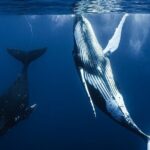
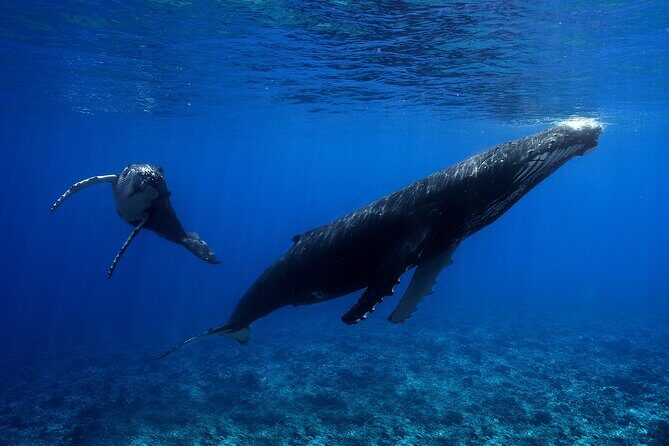
Humpbacks right off Moorea is the main event. This 4-hour small-group whale tour is built around a respectful boat crew that waits for the right weather and animal behavior before you even hop in. Humpback whales up close and a real shot at swimming alongside a mother and calf are why people line up for this one.
I love the focus on safety and whale rules, not just chasing sightings. Henua and Nicolas (and the rest of the team) keep the group together, watch everyone in the water, and only launch when conditions are favorable. The main drawback to consider is practical: it’s an open-air boat and the swim can be strenuous, especially when the sea is choppy or it’s rainy.
In This Review
- Key highlights to look for
- Moorea whale time: what makes this tour work
- Meeting at Quai des croisières and getting onto the water
- How whale spotting turns into swimming (without cutting corners)
- What swimming actually feels like in Moorea
- Safety and respect: the crew’s real job
- Typical sightings: what you might see besides humpbacks
- Price and value for your money
- Who this tour suits best (and who should skip it)
- Small details that make a big difference
- Should you book whale watching and swimming with Temoana Tours?
- FAQ
- Do you get picked up, or do you go to the meeting point yourself?
- How long is the whale tour in Moorea?
- How many people are on the tour?
- Is swimming required for this experience?
- How physical do I need to be?
- What if the weather is bad?
- Do I need anything to book, like a ticket?
- What happens if I cancel?
Key highlights to look for
- Small group feel: max 6 people total, so you’re not lost in a crowd.
- Only some go in the water: the operator keeps the in-water time structured, with small numbers at once.
- Weather and whale behavior come first: the guide waits to launch until conditions look right.
- Crew attention is a big deal: safety checks, group management, and quick repositioning matter.
- Multiple attempts for swimming: you usually get more than one chance if whales are active.
- You may get more than whales: one trip included dolphins along with humpbacks.
Moorea whale time: what makes this tour work
Moorea is famous for humpback whales, but the real value here is how the tour runs once you’re on the water. This outing is scheduled for about 4 hours, which gives enough time to search, watch, and (when conditions allow) do launches into the water safely. The crew’s stated approach is respectful and rules-based, and that shows in how they time the swims.
One thing I appreciate is that they don’t treat swimming as guaranteed no matter what. Instead, the guide proposes the launch only after checking weather conditions and whale behavior. That means you’ll spend time watching from the boat, and you might wait a bit—but that wait is often what makes the experience feel controlled instead of chaotic.
The other big win is the human side. Several reviews highlight guides by name—especially Henua and Nicolas—and describe people keeping an eye on everyone, including swimmers who need help adjusting gear or staying close to the group. If you want a tour where someone is actively managing risk, not just pointing you at whales and hoping for the best, this one fits.
You can also read our reviews of more whale watching tours in Moorea
Meeting at Quai des croisières and getting onto the water
You start at Quai des croisières in Moorea, and the tour ends back at the same meeting point. If you’re coming with a hotel on the island, pickup is offered, which matters because Moorea traffic and walking distances can be annoying when you’re on a tight cruise schedule.
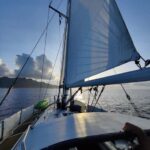
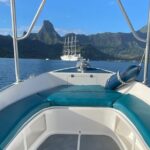
Once you board, expect the experience to feel like a real boat day rather than a theme-park activity. The crew will handle the setup and you’ll get oriented before you go looking for whales. Several reviews mention an open-air setup with no real protection from the elements, so plan for wind, spray, and changing weather.
That open-air detail changes the vibe. On calm days, it’s great—cool sea air, fresh air, and wide views. On a rainy or windy day, it can be cold fast, and one review warned about feeling nearly frozen before getting back. If you run hot and dry, you’ll be happier. If you hate getting soaked, bring extra layers and accept that you’ll likely feel the weather.
How whale spotting turns into swimming (without cutting corners)
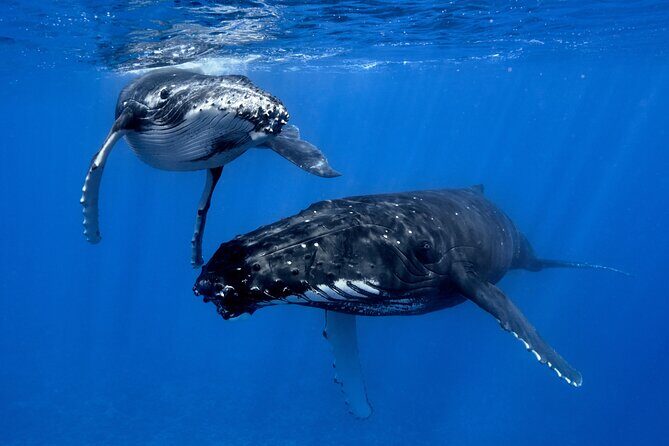
Here’s the heart of the day: watch from the boat, then get in when the guide says it’s the right moment. The guide monitors not just the whales, but also what the sea is doing. That’s important because swimming with humpbacks isn’t like snorkeling in a calm lagoon—you’re in open water conditions where timing and positioning matter.
In practice, you should expect a rhythm:
- The crew locates whales and gets into a viewing position.
- You watch from the boat while the guide evaluates safety.
- If conditions and behavior are favorable, the group does launches into the water in small numbers.
- After each swim, the crew repositions and prepares the next opportunity.
Multiple reviews describe having several chances to swim, with in-water time arranged around whale movements. One review even notes the guide being determined enough to extend the tour slightly to make sure people got their moment. That’s the difference between a tour that feels scheduled and a tour that feels like the crew is working the situation for you.
What swimming actually feels like in Moorea
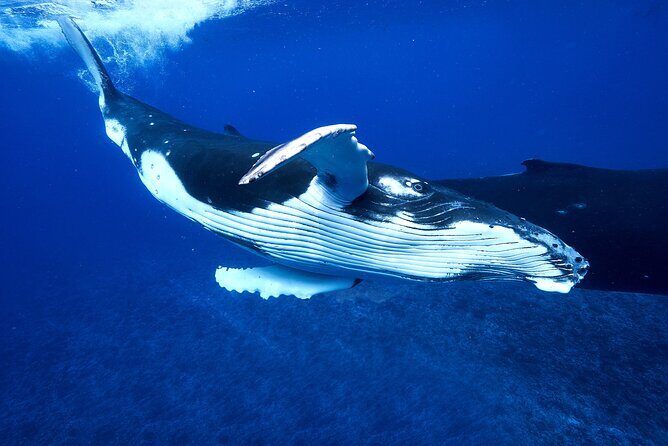
This is not a casual swim. The tour is designed for people with moderate physical fitness, and reviews repeatedly stress that being a decent swimmer helps a lot. The sea can be bumpy, and you may have to keep pace with the group while waves roll through. One review mentions high tempo swimming in deep water while dealing with fogging goggles and empty snorkel gear—basically, “easy water” does not always show up on this route.
If you’re prone to motion sickness, take it seriously. One person recommends taking Gravol ahead of time if you’re sensitive. That’s not a small note—on open water with swells, riding the boat can be tiring, and swimming on top of that adds effort.
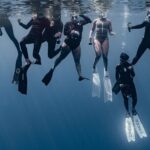
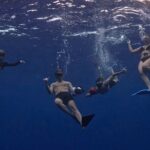
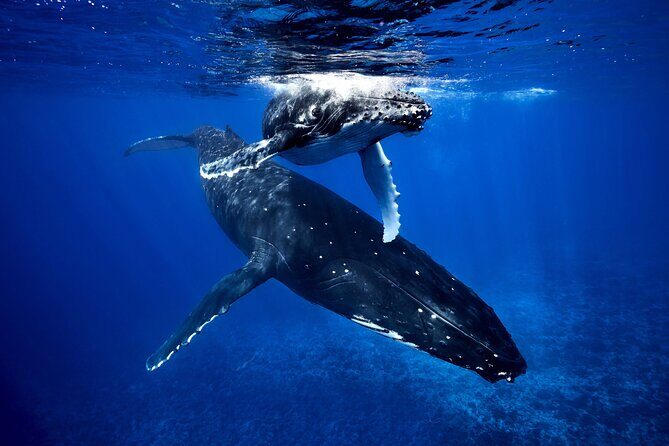
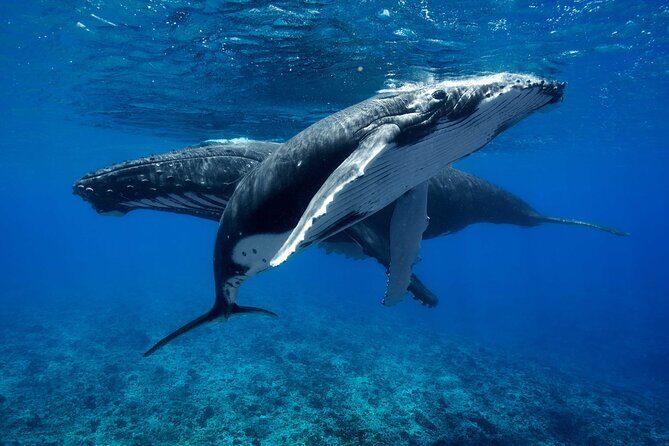
On the positive side, the closeness can be jaw-dropping. Reviews mention seeing a mother and baby humpback, with animals getting close enough that the experience goes beyond watching. One review said the third swim attempt was the charm—so if you don’t get in immediately, don’t assume it’s over. When whales are near and the crew times the launch well, the experience can feel like you’re part of their world instead of a spectator.
Safety and respect: the crew’s real job
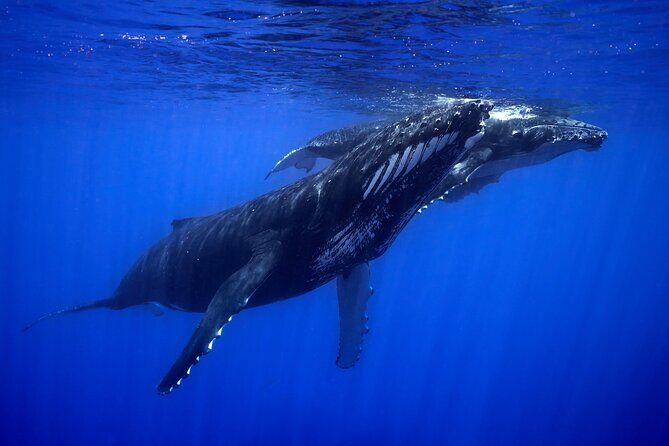
This tour’s credibility comes from how safety and whale rules show up in day-to-day decisions. The operator’s stated creed is respectful and humble toward the ocean, and you can feel that in how the guide times launches and how the captain positions the boat. Reviews also highlight that the crew checks on people during the swim and keeps the group together so no one gets left behind.
Another detail that stands out is coordination. One review describes the guide contacting other boats to ask about whale sightings, and then extending the tour to improve the odds of seeing whales up close. That tells you this isn’t just luck-and-leave. The crew is actively reading the situation and working with what’s on the water.
There’s also a rule-of-the-game aspect that you should understand before you go. Not everyone may be in the water at the same time. That’s not necessarily a bad sign—it’s often what keeps the experience safe and controlled when conditions allow only small numbers to swim. The trade-off is time: you might spend more of the day on the boat than you expected if you’re not in the water every round.



Typical sightings: what you might see besides humpbacks
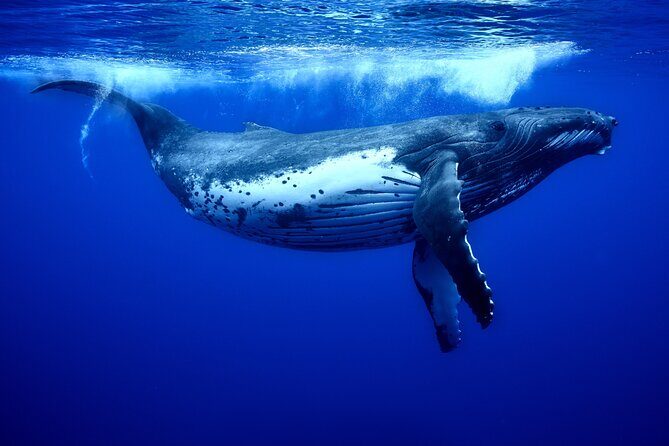
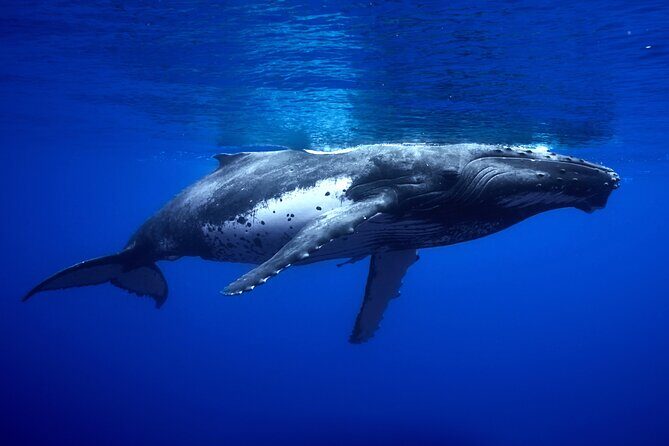
The main target is humpback whales, and the tour is designed around them. Many reviews mention seeing multiple whales and frequently include the big emotional moment: a mother and calf situation. That combination tends to be what people remember long after the finned silhouette fades from memory.
You might also see other marine life. One review mentioned dolphins playing in the same overall experience. It’s not something you should treat as guaranteed, but it’s a reminder that whale day can be more than just one species and one surface moment.
And yes, whale watching means randomness exists. The crew can do everything right and still end up with short sightings, depending on where the whales travel and how the sea is behaving. That’s why the tour’s “wait for favorable conditions” approach matters: it improves the odds that any in-water moment is safe and meaningful.
Price and value for your money
At $327.95 per person (about 4 hours), this is priced as a premium small-group experience. Is it worth it? For the right person, the answer is often yes, because you’re paying for three things that are hard to fake: small-group management, frequent repositioning, and the willingness to delay launches until it’s safe.
The “premium” part shows up in how tightly controlled the in-water experience is. When only a small number can swim at a time, you’re not buying a mass-group experience where the boat does one quick pass and moves on. You’re buying time and attention—especially from guides like Henua and Nicolas, who are praised for safety-first behavior and for repeatedly getting people into the best positions.
But here’s the balance you should keep in mind: if you’re expecting everyone to swim every time, that might not match reality. One review felt the pricing didn’t match how in-water time was distributed. You may also notice that the experience can involve waiting, and waiting can feel long when you’re on a schedule.
So my practical take: if swimming with humpbacks is your top goal and you’re physically ready for open water, this price can make sense. If you mainly want photos from the boat, you might still love it, but I’d check your expectations about how often you’ll be in the water.
Who this tour suits best (and who should skip it)
You’ll get the most out of this tour if you’re:
- A confident swimmer (or at least comfortable in open water)
- Ready for an active day with wind and possible rain
- Looking for a safety-focused crew and structured in-water attempts
- Happy to wait while the guide decides when whales are close enough and conditions are right
You should think twice if you:
- Hate boats with waves or get motion sick easily (plan accordingly)
- Are uncomfortable in deep water or can’t handle a swim tempo in choppy conditions
- Want a guaranteed in-water slot at every moment (the schedule depends on whales and sea state)
Also, moderate fitness is mentioned, and that’s accurate in real life. Even just being on the boat can feel tiring, and swimming adds another layer. One review said the activity was pretty strenuous, even for people who were just trying to participate fully.
Small details that make a big difference
A few practical notes can turn a good trip into a great one:
Bring swim-ready gear comfort. Goggles can fog, and waves can complicate gear adjustments. If your snorkel setup is sensitive, practice with it ahead of time. Once you’re in the water, it’s harder to fix things while keeping up with the group.
Dress for being cold. This boat can be open-air, and rain happens in Moorea. If you know you get chilly, pack layers you can still handle in wet conditions. One review described feeling nearly frozen during a rainy outing.
Plan for sea conditions. If you’re sensitive, consider motion sickness help like Gravol (one review specifically suggested it). Even if you don’t usually get sick, the combination of open water and activity can catch you off guard.
Expect some language variation. One review said the guide mostly spoke French and repeated less often in English. That doesn’t mean you won’t understand safety instructions, but it’s a good reason to pay attention closely at the start and during briefings.
Should you book whale watching and swimming with Temoana Tours?
If your dream is to see humpback whales and you want a real chance to swim with them under strict timing and safety decisions, I’d strongly consider booking. The small group size, the careful “launch only when conditions are favorable” method, and the named crew members like Henua and Nicolas getting repeated praise all point to a solid operation.
Book it if:
- You can swim confidently and you’re comfortable with open water conditions
- You want the guide to take safety and whale rules seriously
- You value a crew that actively works to find whales and improve your odds
Skip (or at least rethink) if:
- You’re mainly after comfort and zero physical effort
- You don’t handle choppy open water well
- You’re expecting everyone to be in the water at every round
FAQ
Do you get picked up, or do you go to the meeting point yourself?
Pickup is offered, but the start location is at Quai des croisières in Moorea and the tour ends back at the same meeting point.
How long is the whale tour in Moorea?
The duration is approximately 4 hours.
How many people are on the tour?
The tour has a maximum of 6 travelers.
Is swimming required for this experience?
No. Not everyone may go into the water at the same time, and some people will watch from the boat depending on the situation.
How physical do I need to be?
Travelers should have a moderate physical fitness level, and swimming can be strenuous depending on sea conditions.
What if the weather is bad?
This experience requires good weather. If it’s canceled due to poor weather, you’ll be offered a different date or a full refund.
Do I need anything to book, like a ticket?
You receive a mobile ticket, and confirmation is received at the time of booking.
What happens if I cancel?
Free cancellation is available up to 24 hours in advance for a full refund, and changes less than 24 hours before the start time aren’t accepted.