REVIEW · TAHITI
Private Tours of Tahiti by Lydia. Full or Half Day
Book on Viator →Operated by Tours of Tahiti · Bookable on Viator
Tahiti is small, but the island story is huge. This private tour with Lydia is built for people who want more than scenic photos. I like that the day is structured around culture and place, with stops that connect geology to everyday life, not just viewpoints.
You’ll also appreciate the pace. It’s a private group tour (up to 8), and Lydia explains what you’re seeing in plain, human terms, with lots of chances to ask questions. One thing to consider: it runs best on good weather, and if conditions force changes, you may get an adjusted route rather than every exact stop.
In This Review
- Key things that make this Tahiti private tour worth it
- Lydia’s Tahiti tour: part field trip, part island conversation
- Full day (8 hours) vs half day (about 5): which one fits your schedule?
- Matavai Bay to Point Venus: black sand, early European contact, and local art
- Point Venus (Matavai Bay)
- Parc de Tahara’a (the one-tree hill view)
- Arahoho Blowhole: ocean force turned into a park
- Waterfalls and sacred purification: Vaimahuta and the Water Gardens of Vaipahi
- Cascade Vaimahuta
- Water Gardens of Vaipahi
- Lava tube geology and a reconstructed marae: where belief meets the landscape
- The lava tube cave with fresh water
- ’Ārahurahu Marae: a sacred site with surviving meaning
- Teahupoo and Papara: the black-sand surf world (and why it’s famous)
- Teahupoo: danger, history, and Olympic-level waves
- Papara: surfers at the river mouth and a black-sand learning beach
- Te Fare Iamanaha Museum: when the gardens turn quiet
- What to know before you add it
- Price and value: what $650 per group really buys you
- How to get the most from the day (without turning it into homework)
- Wear for coast + water + walking
- Plan for water and small snacks
- If you want lunch, you’re making the choice
- Expect possible adjustments
- Who should book Lydia’s private Tahiti tour?
- Should you book? My decision guide
- FAQ
- FAQ
- How long is the full day tour?
- How long is the half day tour?
- What is the group size limit for this private tour?
- What does the tour cost?
- Is pickup included?
- Is the Te Fare Iamanaha museum included?
- Is lunch included?
- Does the tour include bottled water?
- What happens if the weather is bad?
- Is this a private tour with other groups?
Key things that make this Tahiti private tour worth it
- A real local guide: Lydia has lived in Tahiti since 1993 and has a Polynesian family story that shapes her guiding style
- Private group up to 8: easy to talk, ask questions, and keep the day moving without crowds
- Scene-to-story stops: black-sand coast, blowholes, waterfalls, marae, surf areas, and a museum option
- Comfort-focused transport: pickup is offered, and the group van setup is designed for a relaxed day
- Optional add-ons: museum time can be requested, and Lydia can suggest lunch spots when you want food on your terms
Lydia’s Tahiti tour: part field trip, part island conversation
This tour is built around one idea: Tahiti makes sense when you connect the dots. Lydia guides you through the island’s customs, history, plants, animals, and geology, but she does it through the places themselves. You’re not just looking at a waterfall. You’re learning why it exists, what it meant to people, and how the ocean and land shape daily life.
Lydia’s personal background adds texture too. She’s lived in Tahiti since 1993, and she married into a Polynesian family in 1995. Her husband Coco’s family name, Faaterehia, can mean to guide. That belief in names and identity isn’t presented as a lecture. It shows up as the way she introduces you to people, legends, and the environment around you.
The tone tends to be upbeat and practical. In the reviews, people repeatedly point to how Lydia keeps things lively, explains clearly, and doesn’t rush you from place to place.
You can also read our reviews of more private tours in Tahiti

Full day (8 hours) vs half day (about 5): which one fits your schedule?
The biggest decision is time. Full day tours run around 8 hours, while half day tours run around 5 hours. In a private tour, that difference matters because it affects how many distinct environments you can experience in one run.
- Choose the full day if you want variety: historic coastal stops, waterfalls and sacred water, a lava-tube style geology stop, and surf-country viewpoints—plus the option of museum time.
- Choose the half day if you want a concentrated sampler and you’re staying near Papeete. Lydia can focus the route so you still come away with a real sense of Tahiti, not just driving past it.
A small heads-up: some half day experiences may run a bit longer than the headline time. That can actually be good. It usually means you’re not being cut off mid-story just to hit a stopwatch.
Matavai Bay to Point Venus: black sand, early European contact, and local art
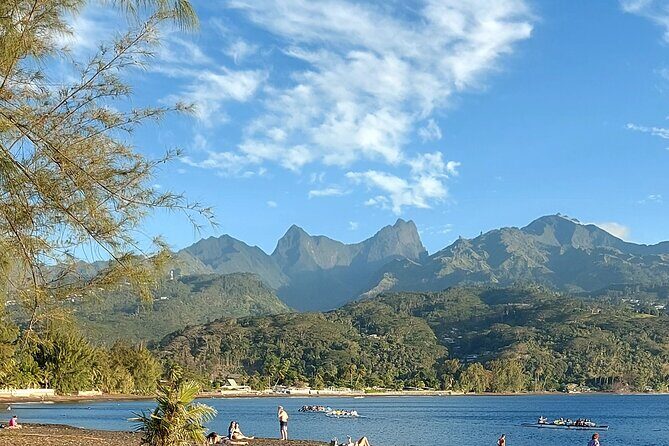
Early in the day, you swing into the Matavai Bay area, where Tahiti feels both historical and everyday.
Point Venus (Matavai Bay)
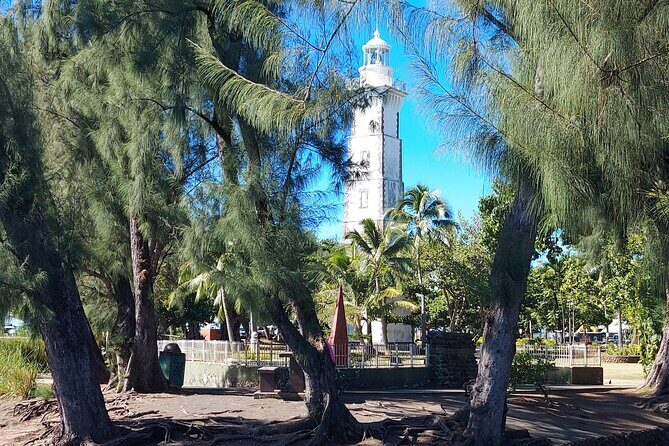
Point Venus is known for its black sand beach and its historical significance. It’s also a classic spot for understanding Tahiti’s meeting points—between local life and early European navigation. Lydia’s explanations here help you frame why certain bays and coastlines became famous in the first place.
There’s also an arts and crafts outlet nearby, which is a handy stop if you want a quick look at local-made goods without turning your tour into a shopping marathon. Even if you don’t buy, you’ll get a better sense of what people are creating in today’s Tahiti.
Parc de Tahara’a (the one-tree hill view)
From there, the route climbs to a viewpoint called Parc de Tahara’a. This is the one spot where the island does the talking. It’s often compared to One Tree Hill, a name connected to Captain Cook. On a clear day, the view reaches across Matavai Bay toward Moorea and Papeete, which helps you understand how close the islands feel—and why harbors and travel routes mattered.
The drawback of viewpoint stops is simple: visibility changes with weather. If it’s hazy, the scenery still reads well, but you won’t get the same sharp island-to-island drama.


Arahoho Blowhole: ocean force turned into a park
Next comes the ocean at full volume: the Arahoho Blowhole area. This stop ties engineering, roads, and nature together. Lydia points out how these blowholes once helped channel ocean pressure toward the road. After a tunnel was built in 2010, the old road became a park area—so you can feel the strength of the ocean without it being the messy part of daily traffic.
This is one of the best stops for travelers who like physics. You’ll see how the sea swells drive the action, and you’ll feel why locals respect the coast.
Waterfalls and sacred purification: Vaimahuta and the Water Gardens of Vaipahi
If you want Tahiti to feel alive, this is where it starts to cool down—literally.
Cascade Vaimahuta
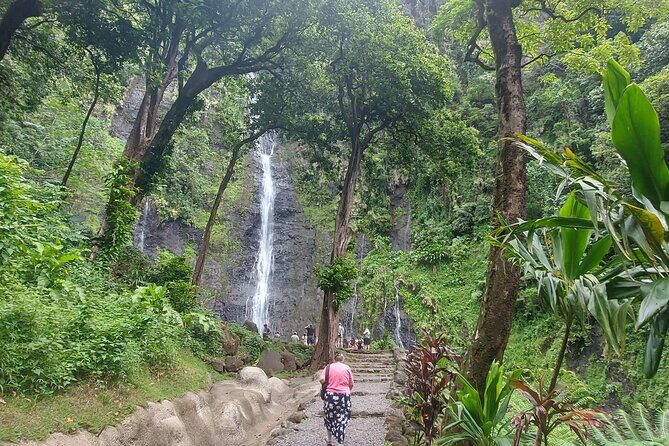
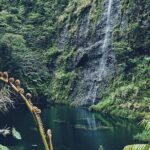
Cascade Vaimahuta is one of three waterfalls in the Faarumai valley. What makes it a standout is access and reliability. It’s described as the easiest to reach, and it’s a permanent waterfall that flows year-round. In other words, you’re not gambling on it being dry.
Even if you’re only stopping briefly, this stop gives you a clear sense of the island’s water systems and how rainfall and land shape what you see. Lydia’s explanations also help you connect waterfall presence to the wider environment rather than treating it as a standalone attraction.
Water Gardens of Vaipahi
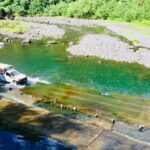
Then you shift to something spiritual and cultural: the Water Gardens of Vaipahi. This was once a sacred site for the Teva clan, used for spiritual purification. The important detail here is that the waters are still respected by Polynesians today.
The gardens include a small waterfall and pools with fish such as tilapia and koi carp, along with smaller freshwater fish that tend to stay shy. The atmosphere is calmer here than at the ocean stops, and that contrast is a big part of why this tour works as a full-day rhythm.
A practical note: because this area is tied to sacred practices and local respect, it’s worth moving quietly, keeping your distance, and following whatever local cues you see on-site.
Lava tube geology and a reconstructed marae: where belief meets the landscape
Two stops make this day feel more than scenic. One is about the ground under your feet. The other is about sacred space.
The lava tube cave with fresh water
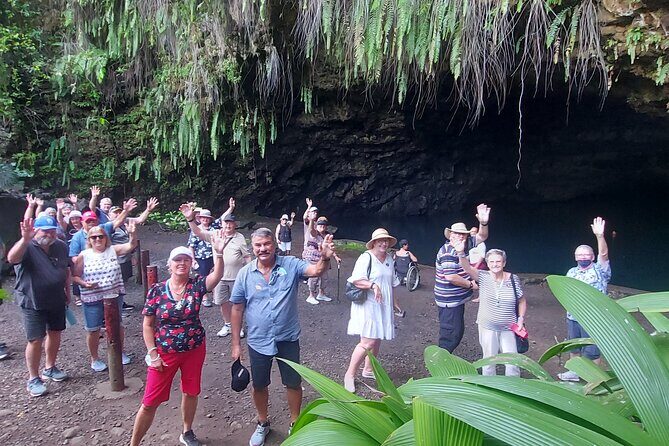
One stop is a geological curiosity: an old lava tube now filled with fresh water thanks to natural springs in the area. You can cool off and feel how different this water is from the ocean—but you won’t be allowed to swim. Swimming is forbidden, even though it’s tempting because the temperature can feel refreshing.
This is a great stop for travelers who enjoy geology stories. You’ll see how volcanic activity created a structure, then water systems took over inside it.
’Ārahurahu Marae: a sacred site with surviving meaning
Next, you visit ’Ārahurahu Marae, a sacred site where Polynesians once worshiped their gods. Lydia also explains a painful part of regional history: in Tahiti, many marae sites were destroyed or neglected after Polynesians converted to Christianity. ’Ārahurahu is described as reconstructed/restored, which matters because it shows how culture survives even after disruption.
If you’re expecting a museum-like stop with explanatory panels only, this is different. The value is in understanding the purpose of the space—how people once organized spiritual life around locations like this, and why the marae still draws respect.
Teahupoo and Papara: the black-sand surf world (and why it’s famous)
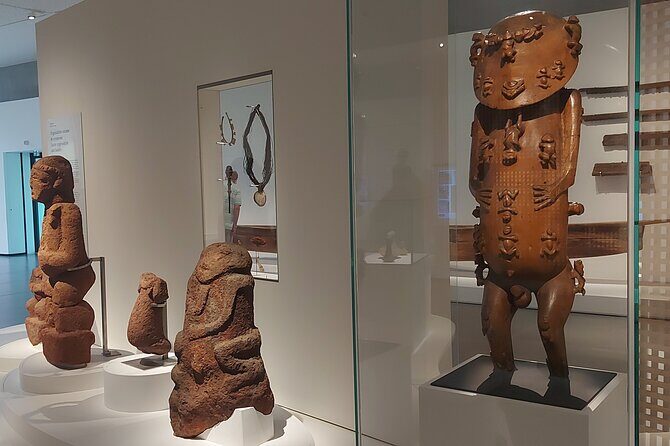
Tahiti’s coastline is one of the island’s biggest identities, and these two stops focus on surf culture and dramatic water conditions.
Teahupoo: danger, history, and Olympic-level waves
Teahupoo is the highlight for wave watchers. It’s known for one of the most dangerous waves on the planet. Lydia also connects it to modern events by pointing out that the site hosted the 2024 Olympic Games surfing competition.
If you want the water up close, there’s an option to take a taxi boat out to view the wave area. Even without going out on the water, the location helps you understand why this spot becomes a global talking point: the ocean here isn’t gentle, and the island isn’t trying to pretend it is.
Papara: surfers at the river mouth and a black-sand learning beach
Then you get a more relaxed surf vibe at Papara. The focus is on the surfers at the Taharuu river mouth and a black sand beach popular for learning to surf. It’s a helpful contrast after Teahupoo: you see both the elite, high-stakes reputation and the everyday reality of people practicing and improving.
This is also a good moment for photos that don’t feel staged. The surf scene gives you motion, not just scenery.
Te Fare Iamanaha Museum: when the gardens turn quiet
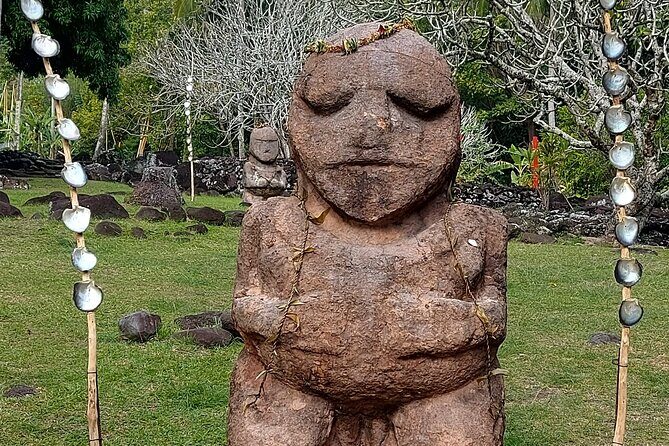
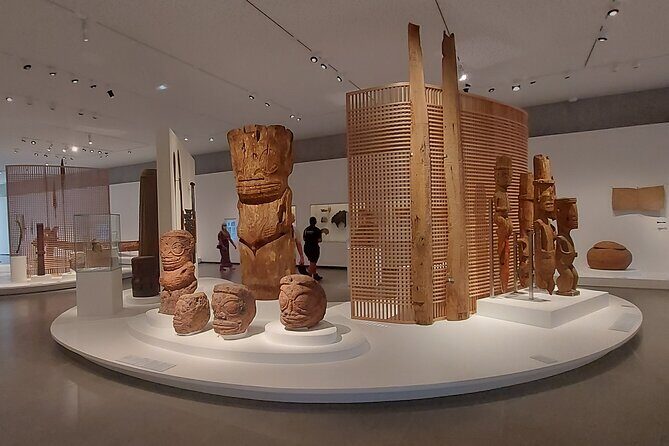
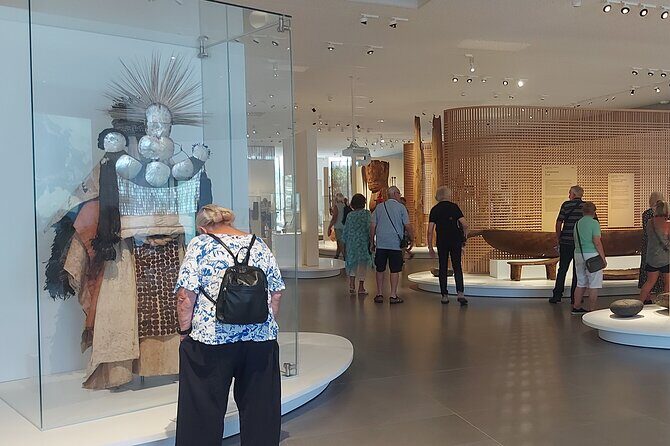
For many people, the museum stop becomes the payoff for all the earlier storytelling. Te Fare Iamanaha – Musée de Tahiti et des Iles sits on a site that has had a museum presence since 1974, and it was recently renovated.
The museum is located in beautiful gardens, and it includes sacred objects. Since sacred items are involved, this stop works best when you treat it as a learning space, not a quick picture stop.
What to know before you add it
- The museum visit is not included in the base tour.
- You can request it, and there’s a listed museum entry cost of 1000f.
If you’re the type who likes context after a day of stops, this is a smart request. If you’re more “outdoor only,” you can skip it and keep your time for coastline and viewpoints.
Price and value: what $650 per group really buys you
At $650 per group (up to 8), this is not a budget tour. But private tours in Tahiti are usually a question of value, not just cost.
Here’s what you’re paying for:
- A single guide working directly with your group, not a shared bus with a tight script
- An explanation style that aims at understanding culture and environment, not only collecting highlights
- A route that can be adjusted based on time available, with a maximum number of sites depending on full vs half day length
- Comfort touches like bottled water, and when available, breadfruit chips or fruit
- Pickup is offered, so you spend less time hunting schedules and more time enjoying the day
For some families, the price works because it replaces multiple entry tickets and cuts the stress of planning a route across different parts of the island. For couples who want the maximum Tahiti experience with less wasted time, it’s often the most efficient way to get orientation fast.
The main financial consideration is simple: this is priced per group, so you’ll feel the value most if you’re traveling as a family or with friends (up to 8).
How to get the most from the day (without turning it into homework)
Even the best private tour can feel long if you show up unprepared. Here are practical tips that match what this route involves:
Wear for coast + water + walking
You’ll be moving between beaches, viewpoints, and areas around waterfalls and gardens. Wear shoes you’re comfortable standing in, and bring light layers. Lava-tube stops can feel cooler than the roadside, even on warm days.
Plan for water and small snacks
The tour includes bottled water, and snacks like breadfruit chips or fruit may be offered when available. If you know you snack often, bring a small extra item so you’re not waiting for a meal.
If you want lunch, you’re making the choice
Lunch is not included. Lydia can advise on where to stop, and you can choose based on your preferences and budget. This is one of those “good problems” setups: you control the meal instead of absorbing a rushed, fixed lunch plan.
Expect possible adjustments
Some stops can be affected by closures or conditions, and Lydia may suggest alternatives to keep the day meaningful. In this kind of island touring, flexibility is part of the deal.
Who should book Lydia’s private Tahiti tour?
This tour is a strong match if:
- you want a private, no-crowd day and you like asking questions
- you care about how Tahiti works—geology, plants, animals, history, and cultural meaning
- you have one day (or half a day) and you want it to count
- your group prefers a guide who can adapt the route instead of following a rigid script
It may be a less ideal fit if:
- you’re sensitive to long drives and want only one or two places
- you struggle with entering the vehicle on your own, since the tour notes this isn’t recommended in that case
- you’re traveling without flexibility for weather-dependent changes
Should you book? My decision guide
If you’re choosing between a quick drive-by and a guided learning day, I’d lean toward booking this one with Lydia. The structure makes it easy to get your bearings fast, and the stops connect to bigger themes: island origins, sacred places, ocean power, and modern surf culture.
Book it if you value explanations and want the island to feel understandable, not just pretty. Skip it only if your ideal Tahiti day is mostly relaxation time with minimal stops, because this tour is designed to be active and information-driven.
FAQ
FAQ
How long is the full day tour?
The full day tour runs about 8 hours.
How long is the half day tour?
The half day tour runs about 5 hours.
What is the group size limit for this private tour?
The tour is private and up to 8 people can join per group.
What does the tour cost?
The price is $650.00 per group.
Is pickup included?
Pickup is offered.
Is the Te Fare Iamanaha museum included?
No. The museum visit is not included, but you can request it. The listed museum entry cost is 1000f.
Is lunch included?
Lunch is not included. Lydia can advise on where to eat if you want a lunch stop, and it’s at your own cost.
Does the tour include bottled water?
Yes. Bottled water is included, and breadfruit chips or fruit may be provided when available.
What happens if the weather is bad?
The experience requires good weather. If it’s canceled due to poor weather, you’ll be offered a different date or a full refund.
Is this a private tour with other groups?
No. It’s a private tour/activity. Only your group participates.