REVIEW · TAHITI
Diving initiation
Book on Viator →Operated by Eleuthera Tahiti Diving Center · Bookable on Viator
Your first scuba try can feel effortless. Tahiti’s warm lagoon and a short small-group lesson with Eleuthera Tahiti Diving Center turns basic safety checks into an immediate underwater view of fish and coral.
Tahiti small-group
I love that the session is designed for complete beginners, with step-by-step guidance so you know what to do and why. I also like the ratio: the activity limits you to just two participants, which makes it easier to get answers fast and feel supported.
beginner two
One drawback to consider: if you need extra time to process instructions, don’t stay quiet. A first-time participant reported their instructor (C) didn’t explain enough before entering the water, which left them feeling unprepared with sinking control.
pre-water briefing
In This Review
- Key highlights that matter
- Tahiti’s first scuba lesson: why it works so well
- Price and value for your first underwater training
- Where you start in Puna’auia and how the timing affects the day
- Before you go under: briefing, gear fit, and comfort checks
- The underwater learning: safety skills that transfer to later certification
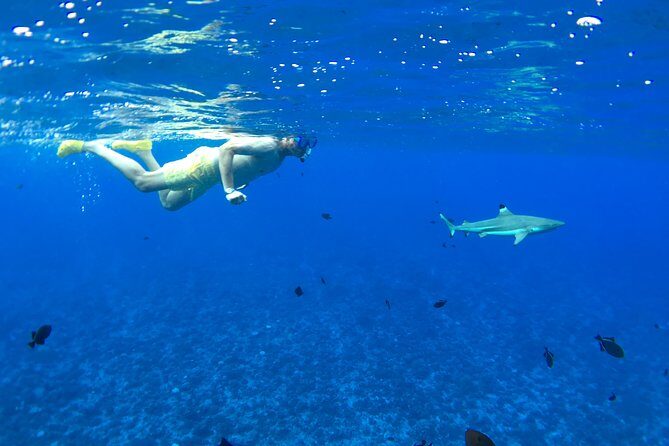
- What you’ll see: fish, coral, and wreck scenery (even on a short lesson)
- The instructor and staff experience: where the lesson gets personal
- Mobile ticket and the smoothness of logistics (without overthinking it)
- Who this is best for (and who should look elsewhere)
- Should you book this first scuba initiation in Tahiti?
- FAQ
- What location is the meeting point for this experience?
- What time does the tour start?
- How long does the scuba initiation last?
- Is this suitable for complete beginners?
- What’s the minimum age?
- How many people are in the group?
- Will I receive a mobile ticket?
- What kind of underwater sights can I expect?
- Can I cancel and get a full refund?
Key highlights that matter
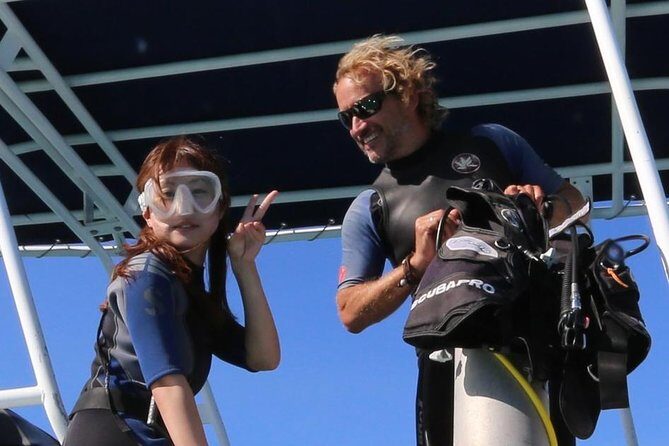
- A true first-timer format built for people starting at zero, including kids over five
- Max 2 people so your instructor can correct your technique right away
- Clean, ready-to-use equipment noted as setup and gear condition by multiple people
- Tahiti underwater variety with close-up fish and coral, plus wreck/coral reef scenery
- Short, focused timing at about two hours, so it fits a half-day plan
Tahiti’s first scuba lesson: why it works so well
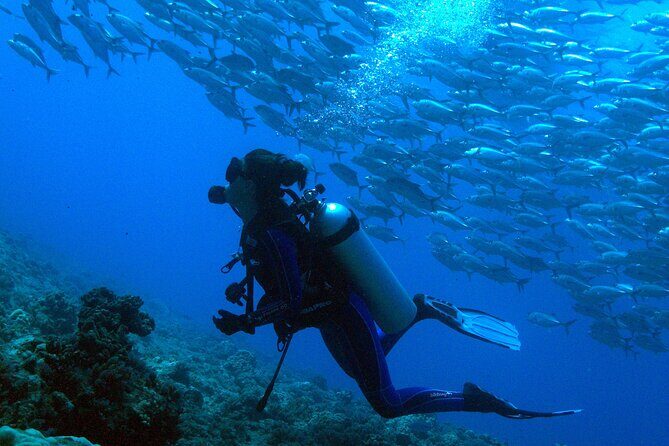
Tahiti is the kind of place that makes a first scuba lesson feel possible. The water and marine life do you the favor of motivation. And because this is a basic initiation, the goal isn’t showmanship—it’s learning control, breathing, and safety habits you can reuse later.
What makes the experience especially appealing is the structure. You’re not dumped into the deep end of complicated theory. You get guided practice in a small group, then you spend time underwater so the learning clicks in your body, not just in your head. That’s also why it’s such a strong choice for families: kids over five can join, and the session is built to be understandable rather than intimidating.
Still, keep expectations realistic. A first lesson is fast. You’ll learn new sensations (weight changes, breathing rhythm, buoyancy) while also trying to stay calm. If you need more explanation time than average, ask questions early—before you’re in the water.
You can also read our reviews of more scuba diving tours in Tahiti


Price and value for your first underwater training
At $162.08 per person for about two hours, this isn’t a bargain price—but it also isn’t a luxury price. It sits in the “serious activity” range, so value comes from what’s included and how the instruction is delivered.
Here’s what you’re really paying for:
- Small-group coaching (max 2 people): this tends to improve safety and comfort because there’s less waiting and more attention.
- Personalized instruction: the best first-timer lessons reduce guesswork. You’re guided through what to do next.
- Clean gear setup: multiple comments highlight that equipment was prepared and ready.
If you’re comparing options, don’t look only at the sticker price. Look for lessons that keep groups tiny, include real coaching, and get you underwater during that short window. This one clearly aims at those priorities.
Where you start in Puna’auia and how the timing affects the day
The activity meets at C97P+J5J, Puna’auia 98713, French Polynesia with a 10:30 am start. It returns to the same meeting point at the end.
That matters for planning. A late morning start is handy when you want a relaxed start—breakfast, a little beach time, then training without waking up at the crack of dawn. You also avoid stretching the day too long. With an approximate 2-hour duration, you can usually build the rest of your afternoon around it.
One practical note from how the experience runs: while the official meeting point is in Puna’auia, some groups have been picked up near a cruise ship pier and driven to the marina (Nicolas handled pickup in one reported case). If you’re arriving by cruise, it’s worth asking how you’ll get from the pier to the water.
Before you go under: briefing, gear fit, and comfort checks
A first scuba session lives or dies on how well the pre-water stage sets you up. Your goal is to understand what will happen next, not just to hear it once.
In a strong lesson, you’ll get:
- A calm explanation of what to do and what not to do
- Time to get your gear on correctly
- A comfort-first approach where your instructor checks how you’re feeling before entry
What I like about this experience is the emphasis people reported on being comfortable underwater. One instructor was described as friendly and making sure participants felt at ease under the surface. Another first-time participant credited their instructor with detailed explanations and a professional approach.
But here’s the consideration: instruction quality can vary. One person’s experience with their instructor (C) didn’t include enough effort explaining before they entered the water, and they felt unprepared with sinking control. That’s the exact type of issue you should watch for—if something feels rushed, say so right away.
My advice: before you step into the water, ask one simple question:
- Can you show me exactly how you’ll handle breathing and buoyancy during the first moments?
Clear guidance at that stage is what turns anxiety into confidence.
The underwater learning: safety skills that transfer to later certification
This is an initiation format. That means it’s not only about seeing marine life—it’s about building the first layers that later certification depends on.
From the lesson description and how people described their experiences, you can expect an emphasis on:
- Safe technique from the start (how to manage breathing and posture)
- Moving through underwater space with control
- Learning basic fundamentals that help you stay relaxed
The fun part is that the learning happens where you actually want to be: in warm, tropical water with fish and coral close by. It’s much easier to remember steps when you also understand what you’re doing and what you’re about to see.
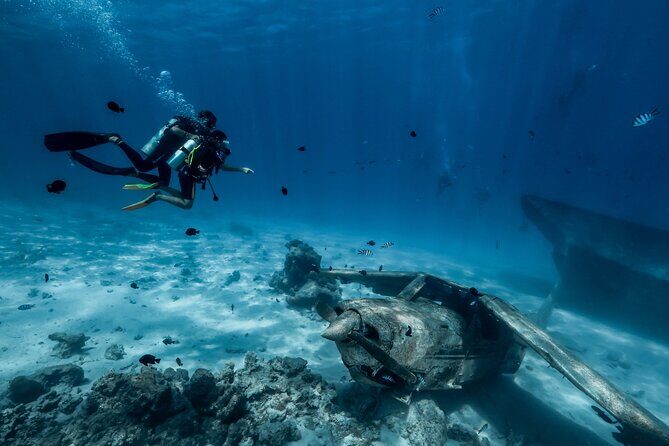
Also, the experience description points to a feeling of weightlessness, plus viewing corals and even wrecks. One participant specifically described seeing a manmade reef built from a sunken wreck and a plane. That’s the kind of scenery that turns a practice session into a real memory.






What you’ll see: fish, coral, and wreck scenery (even on a short lesson)
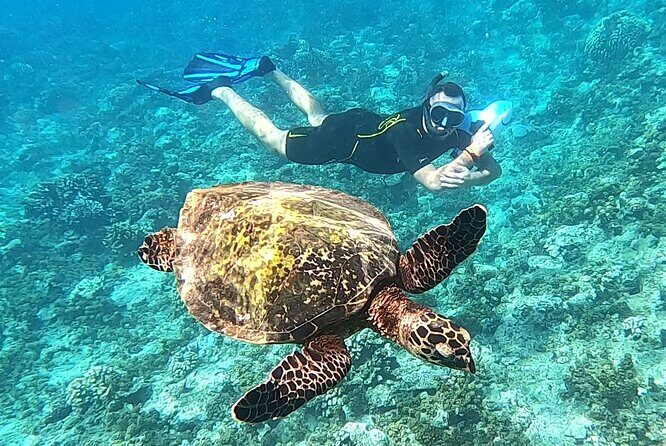
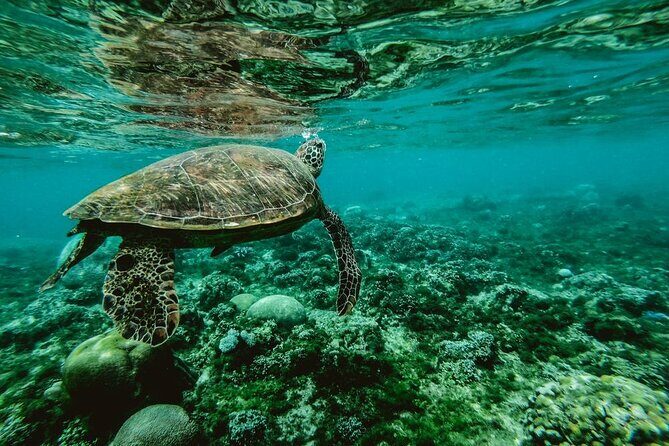
One of Tahiti’s best arguments for a first scuba session is how close you can get to marine life without needing deep expertise. The experience is designed so you can view:
- Colorful fish up close
- Corals with a real sense of scale
- Wrecks and coral reef areas, which add variety beyond just sea grass and rocks
On top of that, one report mentioned a manmade reef made from a sunken wreck and plane. Even if you don’t see that exact feature every time, the lesson framework clearly aims to show wreck-and-reef underwater interest while keeping the training safe and structured.
This is also why it’s smart that the group is small. When only two people are in the water, instructors can position you better for both viewing and instruction.
The instructor and staff experience: where the lesson gets personal
A lesson like this lives and dies on the instructor’s communication. The best experiences reported were friendly, professional, and focused on comfort and clear steps.
Two names stood out in the feedback you provided:
- Naia, who kept people informed about transportation status and communication
- Nicolas, who handled pickup near the cruise ship pier for at least one group
And then there’s an important counterpoint. One first-timer felt their instructor (C) didn’t explain enough before getting into the water. That doesn’t mean the whole operation is inconsistent—it means your comfort depends on the briefing and on whether the instructor matches your learning pace.
So here’s how to make this more likely to go smoothly:
- Tell your instructor right away that you’re new
- Ask for a quick walkthrough before entry
- If you feel confused, stop and request clarification immediately
In a max-of-two setup, your instructor has the bandwidth to respond.
Mobile ticket and the smoothness of logistics (without overthinking it)
The experience uses a mobile ticket, which is great if you don’t want to hunt for printouts or deal with last-minute confusion. The session also ends back at the meeting point, so there’s no complicated “half-day puzzle” of where you’ll be dropped.
Time-wise, you start at 10:30 am and finish about two hours later. That makes it easy to plug into a Tahiti itinerary—especially if you plan a calm activity afterward.
You can also take comfort in the fact that service animals are allowed, and the meeting area is near public transportation. If you’re organizing with family or friends, those details reduce friction.
Who this is best for (and who should look elsewhere)
This lesson is a strong match if you:
- Have never done scuba before and want a guided first attempt
- Prefer small-group instruction and a safer-feeling pace
- Want to combine learning with real underwater sightseeing in a short time
- Are traveling with kids over five (the experience is listed as suitable for that age)
It may be less ideal if you:
- Know you need slower explanations before water entry
- Feel stressed by fast transitions from briefing to action
If you’re in that second category, don’t avoid scuba. Just be proactive. Ask for extra time before entry and make sure you can practice the basics without feeling rushed.
Should you book this first scuba initiation in Tahiti?
If your dream is to see Tahiti underwater without turning the day into a long, complicated project, I’d say this is a very reasonable booking. The key strengths are the beginner-focused setup, the max-of-two format, and the way the lesson pairs safety learning with fish-and-coral viewing plus wreck scenery.
Book it if you value:
- Clear coaching and comfort checks
- A short two-hour window that still feels like a real experience
- The chance to get your first underwater skills started on the right foot
Skip or approach carefully if you know you need extra explanation time. In that case, email or ask questions ahead of time so your instructor can plan for your pace. And in the moment, speak up before you enter the water.
FAQ
What location is the meeting point for this experience?
It starts at C97P+J5J, Puna’auia 98713, French Polynesia and ends back at the same meeting point.
What time does the tour start?
The start time listed is 10:30 am.
How long does the scuba initiation last?
The duration is about 2 hours.
Is this suitable for complete beginners?
Yes. It’s described as suitable for complete beginners, including a first-level introduction.
What’s the minimum age?
It’s suitable for kids over the age of five.
How many people are in the group?
The experience has a maximum of 2 travelers.
Will I receive a mobile ticket?
Yes. The experience includes a mobile ticket.
What kind of underwater sights can I expect?
You can expect to see fish and coral, and the description also references views over wrecks and coral reefs.
Can I cancel and get a full refund?
Yes. You can cancel up to 24 hours in advance for a full refund. If you cancel less than 24 hours before the start time, the amount paid is not refunded.