REVIEW · PAPEETE
Tahiti: Unique East Coast Half Day Tour with Local Guide
Book on GetYourGuide →Operated by Unique Tahiti · Bookable on GetYourGuide
Tahiti’s East Coast hits fast. In just 4.5 hours on a small-group van, you move from Papeete to Point Venus, waterfalls, and the Arahoho blowhole with a local English guide guiding the whole story.
Two things I really like about this tour: guides such as Tracy/Tracey, Ronnie/Ronny, Dominique, and Dom bring real island life context with humor, and you get rare access to places most visitors won’t see. The highlight for many people is the hidden-valley leper colony stop, where you meet residents and can feed the unusual blue-eyed river eels.
One consideration: this day includes walking and uneven paths, and it’s not suitable for wheelchair users. Bring sturdy shoes and expect an active half day, not a sit-down cruise.
In This Review
- Key Things I’d Book This For
- A Tight 4.5-Hour Route That Feels Like Real Tahiti
- First Stop: Papeete’s Market, Palace Exterior, and Street-Level Tahiti
- Bay of Matavai and Point Venus: Where European Voyages Meet Polynesian Places
- Tahitian Artistry Stops: Watching Pareo-Style Printing on Weekdays
- A Hidden Valley Leper Colony, Blue-Eyed Eels, and Real Human Stories
- Squirmish Hill Views (Tahara Viewpoint) and Coastal Photo Windows
- Vaimahuta Waterfall, Three Cascades, and the Arahoho Blowhole
- Why the Mercedes Minivan and Pickup Network Matter
- Price and Value: What $176 Buys You Here
- Who Should Book This Tour, and Who Should Skip It
- Should You Book Tahiti’s Unique East Coast Half Day Tour?
- FAQ
- How long is the tour?
- Is it a small group?
- Where does pickup happen?
- What’s included in the price?
- Is lunch included?
- Will the Arahoho Blowhole stop always happen?
Key Things I’d Book This For
- Blue-eyed river eels at a hidden ancient leper colony, plus time to meet locals face-to-face
- Small-group size (8 max) makes it easier to ask questions and get real attention from your guide
- Historic Tahiti stops tied to European exploration at Bay of Matavai and Point Venus
- East Coast views and ocean drama, including the Arahoho Blowhole when conditions allow
- Craft and culture with working artisans, from Tahitian artistry to traditional Tiki statue creation
- Serious variety in one route: market (weekdays), monuments, waterfalls, viewpoints, coast photo stops
A Tight 4.5-Hour Route That Feels Like Real Tahiti
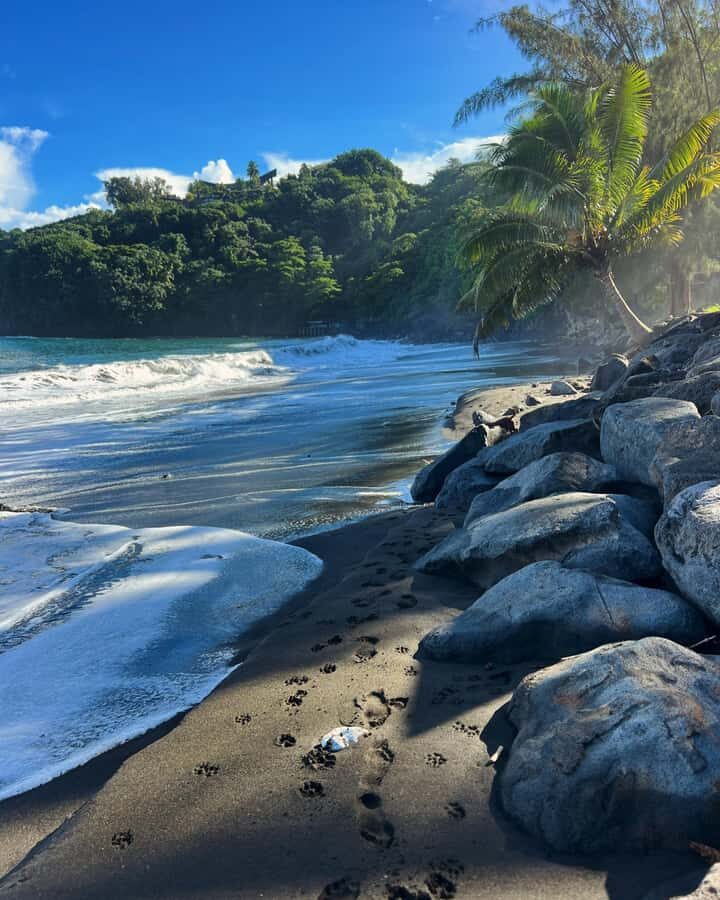
This isn’t a slow, sightseeing-by-windows tour. It’s a focused half-day circuit built around Tahiti’s North East coast energy: lava-coast drama, green valleys, and the kind of history you can point at while standing on the ground. With the timing set for about 270 minutes, you still get a lot packed in, without the exhaustion of a full-day loop.
The small group matters. You’re limited to 8 participants, and you ride in an air-conditioned Mercedes 9-seater minivan. That’s a big deal on Tahiti, where heat and rain can turn an open-air plan into a wishful thinking project.
One more value note: you’re not just collecting photos. You’re stopping in the town, then moving into nature, then back to culture, with your guide connecting the dots between daily life and older European encounters.
You can also read our reviews of more tours and experiences in Papeete.


First Stop: Papeete’s Market, Palace Exterior, and Street-Level Tahiti
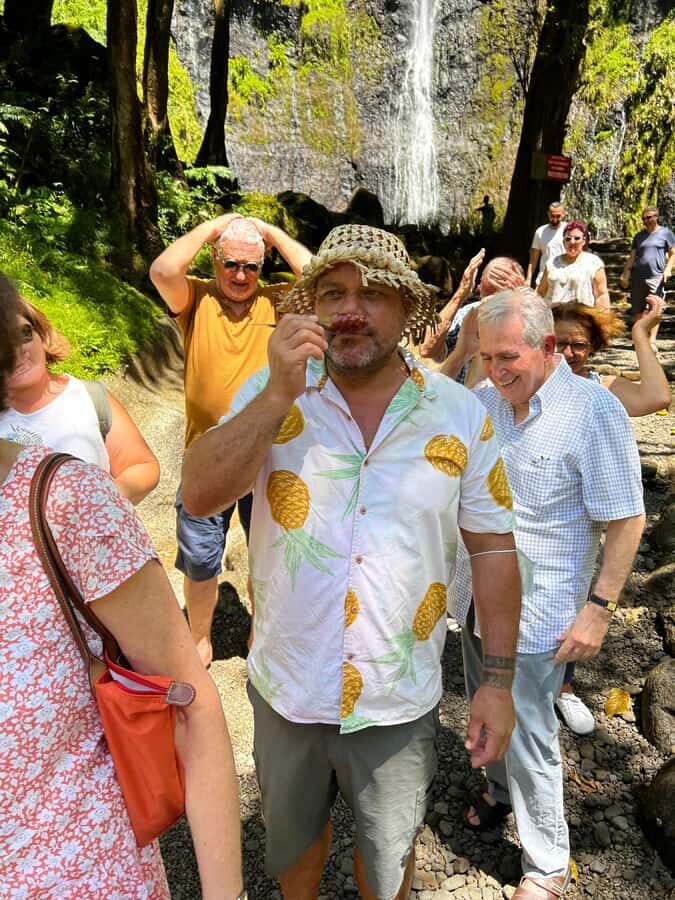
If you’re picked up from a hotel in Papeete (or even from a cruise ship dock location), the day often starts with a quick taste of the city. On weekdays, you may include a visit to the Papeete Market for about 25 minutes. It’s the best kind of quick: enough time to get your bearings and see how people shop and talk, without turning it into a long shopping marathon.
From there, you’ll head toward the Présidence de la Polynésie française for an exterior photo stop and sightseeing. You don’t go inside based on the time and format described, but the stop gives context for how French Polynesia runs day-to-day—helpful if you want more than just beach talk.
Then there’s the road drive-by storytelling. You’ll pass Chinese Cemetery and Temple for a photo stop, and you’ll also notice street art in Papeete as you leave town. These small moments matter because they show Tahiti as a living mix of communities, not just an island postcard.
Practical note: Papeete can drizzle. One of the nicest aspects here is that the tour keeps moving even when weather turns damp, so you still feel like you achieved something even on a grey day.
Bay of Matavai and Point Venus: Where European Voyages Meet Polynesian Places
This is where the tour shifts from city and craft to exploration history you can actually stand on. At Bay of Matavai, you’ll walk through the area tied to explorers such as Captain Wallis, Captain Cook, Bougainville, and even the mutineers of HMS Bounty. Your guide will connect the dots to the era of big European sailings and how those visits changed what maps showed.
One specific story gets special attention here: Captain Cook’s mission to observe the transit of Venus. That scientific mission sits inside the larger picture of contact, which is exactly why I like this stop. It gives you the why behind the monuments instead of just pointing at them.
Next up is Point Venus Lighthouse. Expect photo time and a guided visit, with time that also includes a bit of walking. This stop is a great place to slow down, because views from the coast make it easier to imagine how ships and shorelines met long before modern roads existed.
If you like history that’s grounded in geography—places you can physically locate—this section earns its keep.
Tahitian Artistry Stops: Watching Pareo-Style Printing on Weekdays
On weekdays only, the tour includes added insights into Tahitian artistry. One stop is Tahiti Art Maohi, which runs about 30 minutes and focuses on the process of creating clothing designs you’ll see all over the islands, especially pareos, along with matching garments.
The key detail I like is that you’re not just buying a souvenir at the end. You get to watch how printing happens—how designs transfer onto fabric—so your purchase (if you do one) feels connected to a process, not a machine-made item from a generic shop.
This also tends to create a better conversation with your guide. You’ll ask questions like what the designs represent, how artisans learn the work, and what locals actually wear. That’s where the tour earns the cultural angle without turning it into a lecture.
Even if you don’t plan to buy anything, these craft stops are useful. They give you language for what you’re seeing later in markets and on the streets.
A Hidden Valley Leper Colony, Blue-Eyed Eels, and Real Human Stories
This is the stop that makes the whole tour feel different.
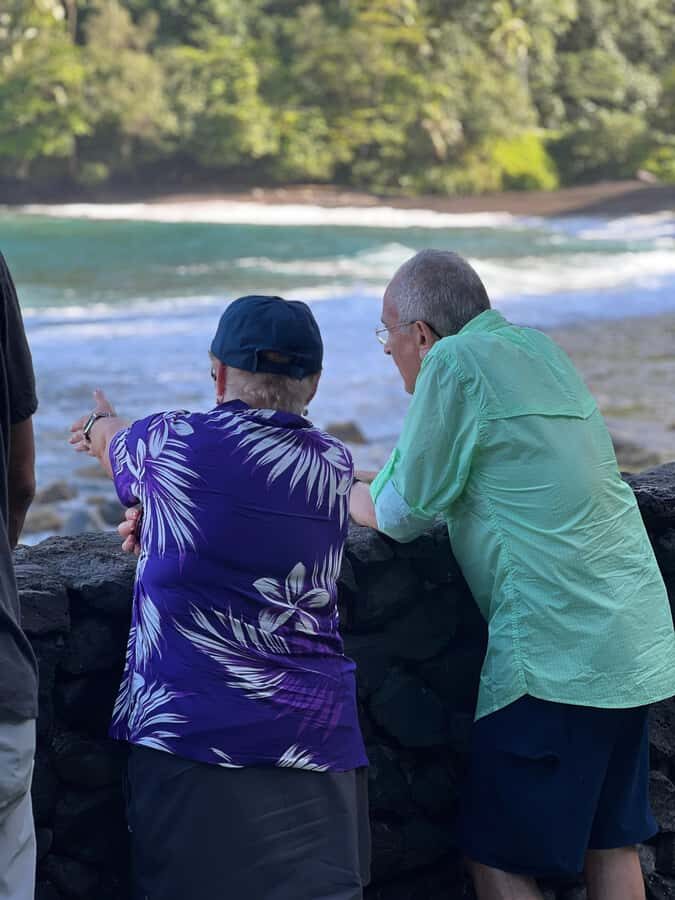
You’ll get exclusive access to a hidden valley visit to an ancient leper colony, and it’s framed around meeting residents and understanding daily life in that community context. In particular, you can feed blue-eyed river eels, which is unusual enough on its own. But the real point is that this is about human contact—your guide helps set expectations so the moment doesn’t feel like a staged performance.
After the eel encounter, you’ll spend time at a local home and workshop. Here you can see how traditional wooden Tiki statues are created. There’s also a chance to purchase a handcrafted souvenir directly from the artisan.
A gentle but important caution: this is emotionally heavy history, even if the visit is presented respectfully. If you prefer only light sightseeing, this part might feel like a contrast. If you like meaningful travel—where your day includes more than scenic breaks—you’ll probably find it unforgettable.




Squirmish Hill Views (Tahara Viewpoint) and Coastal Photo Windows
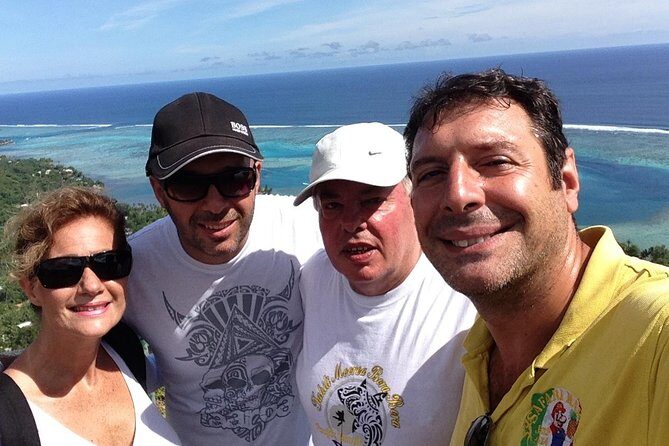
Between culture and waterfalls, you get one of those classic Tahiti viewpoint moments: Belvédère du Tahara’a, also known as Tahara Viewpoint or Squirmish Hill. It’s about a 15-minute stop with photo time and scenic driving that sets up what the day’s East Coast really looks like.
This is where you’ll see Papeete below and get Moorea in the distance, on clear days. Even when it’s misty, the coastline and valley shapes still show how volcanic the island is, and how the ocean has carved its lines.
Why I like this stop: it gives you a mental map. After Tahara Viewpoint, you can connect what you just saw with places like the waterfall valley and the coast stops. It turns the day from a list of locations into one continuing story.
Also, it’s a good photo time slot if your schedule feels rushed elsewhere.
Vaimahuta Waterfall, Three Cascades, and the Arahoho Blowhole
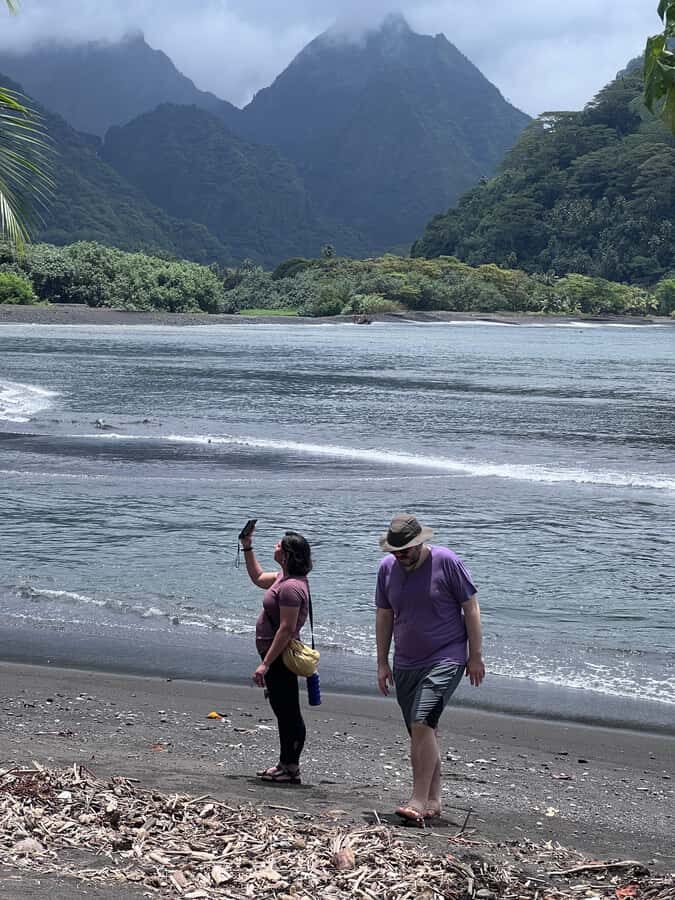
The tour leans into nature hard, and it does it in stages.
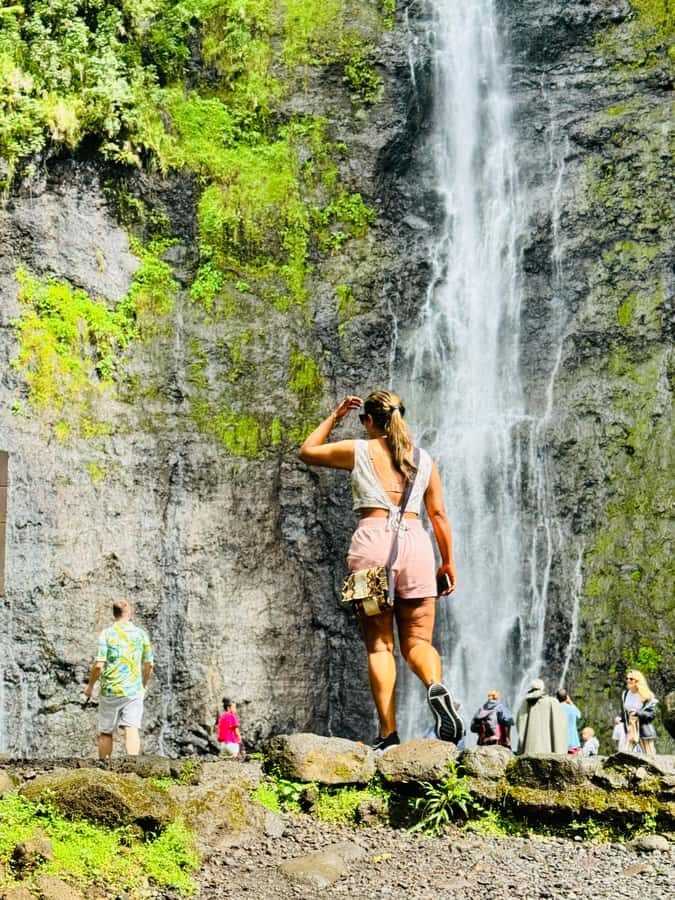
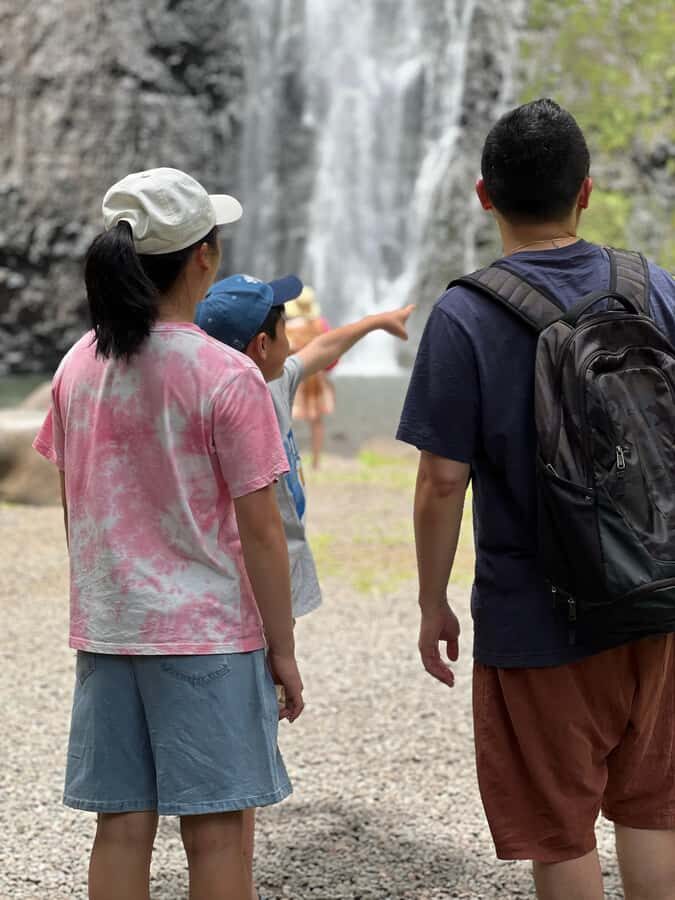
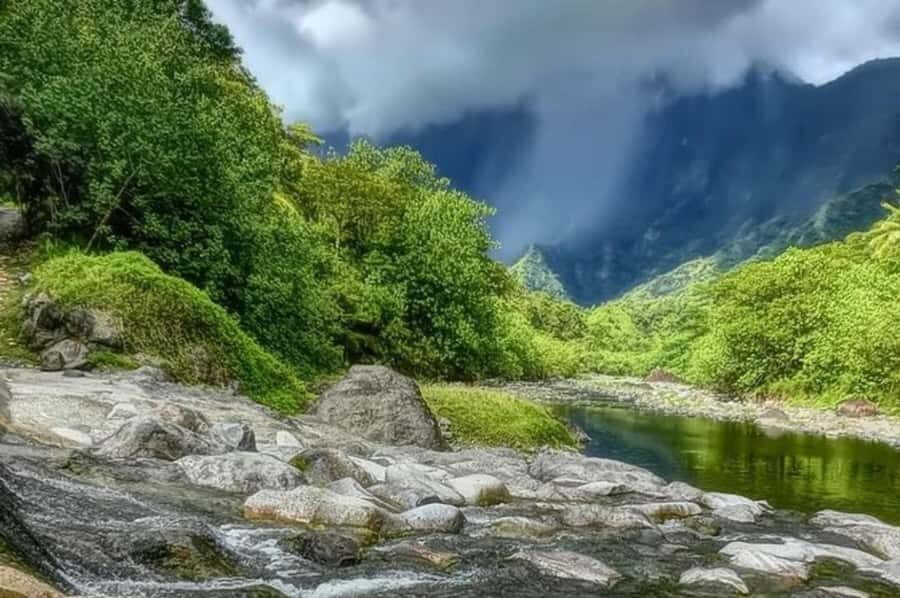
First, there’s time for three cascades (with sightseeing and a walk) for about 35 minutes. Then you’ll head into the Tiare Valley for Vaimahuta Waterfall—a stop that’s described as spectacular, with the refreshing spray and the sense of power you only get up close.
Waterfalls are one of those things that can be affected by local conditions. In one real-world note from the tour’s recent operation, waterfalls were reported closed temporarily due to construction work during a period. So if you travel right around a maintenance window, don’t be shocked if a waterfall section gets adjusted.
Then comes Arahoho Blowhole. This part depends on the ocean: it’s included if ocean conditions allow. When it’s on, it’s dramatic—waves pushing into the volcanic formation and blasting out with force along the lava-tube coast. You’ll be watching from a distance, so you get the spectacle without the risk of getting too close.
This is also where the tour’s “coast energy” shows up—surf-like ocean movement, black-sand coast vibes in the broader route, and those wide-angle views that make Tahiti feel like a living geology project.
Why the Mercedes Minivan and Pickup Network Matter
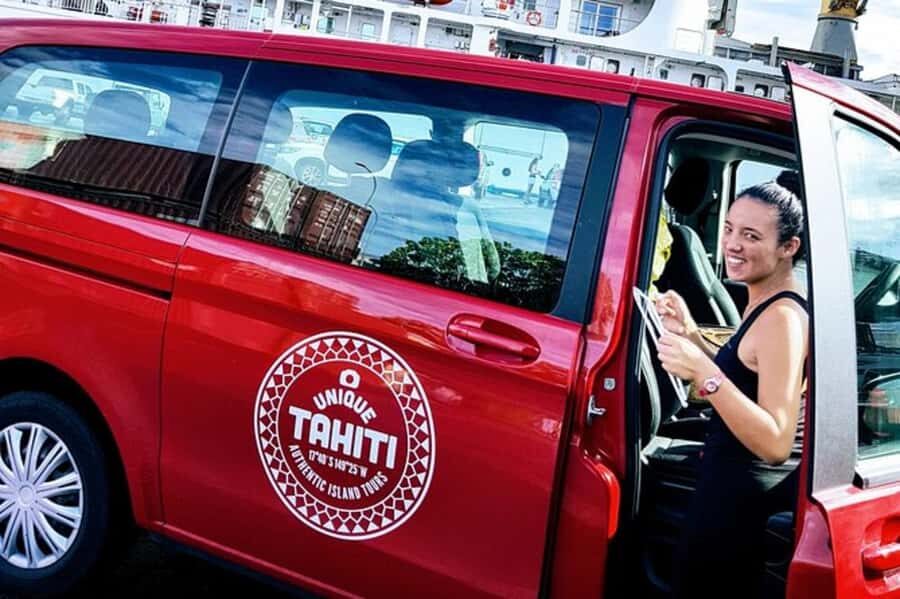
A lot of Tahiti day trips fall apart on logistics: long waits, confusing pickup points, or transport that feels cramped and slow. Here, you’re picked up from multiple hotel options across Papeete, plus cruise ship dock locations. You look for the red Mercedes, and the ride uses a new luxury air-conditioned Mercedes 9-seater minivan.
That matters because the schedule is tight. If you lose time sorting out pickup or getting to the van, you lose the buffer you need for viewpoints, walking, and weather delays.
Inside, the tour has a clear “keep it moving” feel, and it also includes bottled water. The vehicle rules are strict: no food or drinks inside the van, and no alcohol in the vehicle. In practice, that means you’ll want to manage your own breaks and keep your focus on the stops.
Price and Value: What $176 Buys You Here
At $176 per person, you’re paying for more than a drive around the island.
You’re covering:
- Transport in an air-conditioned minivan
- A professional English-speaking local guide
- Bottled water
- A schedule with multiple paid-feeling stops and guided segments
- The big one: exclusive access elements, including the hidden valley visit tied to the leper colony and the workshop encounter
You’re also paying for the fact that you’re not renting a car, figuring out timing, or trying to find hard-to-reach places on your own. For many people, that alone is worth it.
Two limits to keep in mind for value: lunch isn’t included, and there’s no luggage unless you coordinate with the provider ahead of time. If you’re coming from the cruise port with a day bag, plan for light carry or confirm what you can bring.
Who Should Book This Tour, and Who Should Skip It
This tour is a strong match if you want:
- History tied to places like Bay of Matavai and Point Venus
- Coastal scenery plus real nature stops like cascades and Vaimahuta Waterfall
- Culture via hands-on craft time (pareo-style printing on weekdays, and Tiki carving at the workshop)
- A guide-led day that includes interaction with locals rather than only photo stops
It may not be your best choice if:
- You need wheelchair access (the tour is not suitable for wheelchair users)
- You dislike walking on uneven paths
- You’re expecting a relaxed, seated tour with long breaks and lunch built in
If you’re the type who likes learning small details—why an island looks a certain way, what connects explorers to specific shorelines, how artisans make what you’re buying—this day fits your travel style.
Should You Book Tahiti’s Unique East Coast Half Day Tour?
I’d book it if you want a compact day that mixes history, culture, and ocean-and-water drama, all led by guides like Tracy/Tracey, Ronnie/Ronny, or Dominique who keep the pace interesting and the explanations grounded in island life. The small-group size is a big reason this feels personal instead of crowded.
I’d think twice only if you’re traveling with mobility limits or you strongly need lunch included, because the route is active and food isn’t part of the package. Also remember the Arahoho Blowhole depends on ocean conditions.
If you’re visiting Tahiti for the first time and want your day to feel like Tahiti—not just more time in your hotel—this tour is one of the more satisfying ways to do it in a half day.
FAQ
How long is the tour?
The tour runs for about 270 minutes, which is roughly 4.5 hours.
Is it a small group?
Yes. It’s limited to a small group of 8 participants.
Where does pickup happen?
Pickup is available from multiple hotels in Papeete and also at cruise ship dock locations. You look out for the red Mercedes.
What’s included in the price?
Transport in the minivan, an English-speaking professional local guide, and bottled water are included.
Is lunch included?
No, lunch is not included.
Will the Arahoho Blowhole stop always happen?
It’s included if ocean conditions allow, since the spectacle depends on the sea.