REVIEW · PAPEETE
Papeete City Tour, 3hours (on Tahiti)
Book on Viator →Operated by Tours of Tahiti · Bookable on Viator
Papeete history is right on the sidewalks. I love how this tour connects everyday street corners to French Polynesia government and how you still get real time at the Paraita open-air market to browse and shop. The one thing to watch: this is a city-focused hit, so if you’re craving beach or lagoon time, you’ll want to plan that separately.
You’ll get convenient pickup, a cool ride through town, bottled water, and a mobile ticket, which keeps the day from turning into a scavenger hunt. And I appreciate that the guide, Lydia, adjusts the tour to your interests and even works around weather when conditions change.
Private means it’s just your group (up to 8), not a big cattle-car shuffle. The route is also smart for first-timers: colonial-era buildings, wetlands origins, street art options, then market time, with an optional pearl stop if you want more culture before heading back.
In This Review
- Key highlights to plan for
- Papeete’s French Connection: Présidence de la Polynésie française and the Assembly
- Queens Bath to Cathedral: Wetlands origins and the story behind the seafront church
- Paraita Market: Guided access plus real shopping time
- Street art route choice and Queen Pomare VI details you can’t unsee
- Robert Wan Pearl Museum: How black pearls are cultivated
- Price and value: What $399 per group really buys you
- Practical planning for a 3 hours 15 minutes Papeete hit
- Should you book the Papeete City Tour?
- FAQ
- How long is the Papeete City Tour?
- How much does the tour cost?
- Is pickup included?
- Is this tour private?
- What’s included in the tour price?
- What’s not included?
- What stops are included?
- Are the admissions for the stops charged?
- Does the tour require good weather?
- Can I cancel and get a refund?
Key highlights to plan for
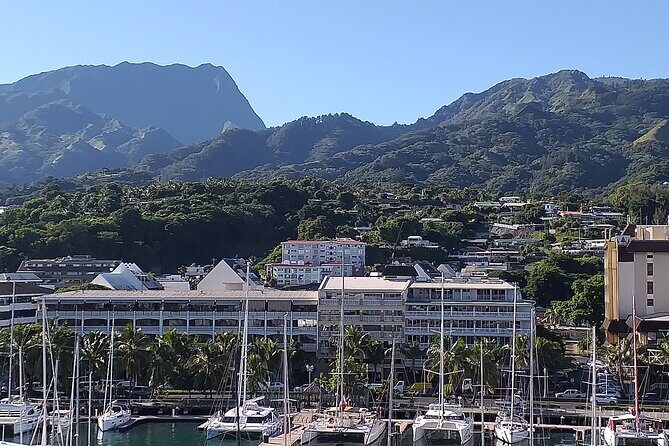
- Government stops that explain how Polynesia fits into France with a clear, guided walkthrough at the main presidential complex and the assembly area
- Queens Bath context tied to the wetlands and natural springs that shaped early settlement in Papeete
- Paraita market with guided access and shopping time so you’re not just looking from the outside
- Street art route choice: you can drive past or walk parts depending on your comfort level
- Optional Robert Wan Pearl Museum visit to understand black pearl cultivation from the man who pioneered it
- Private group flow with pickup and a calm, safe driving approach in heavier traffic
Papeete’s French Connection: Présidence de la Polynésie française and the Assembly
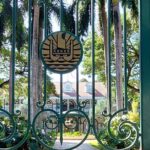
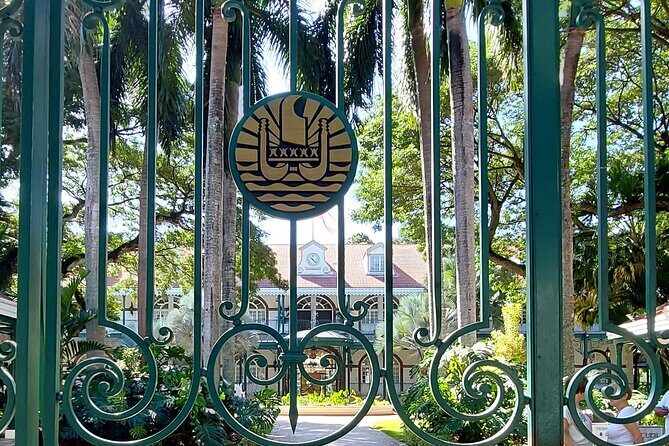
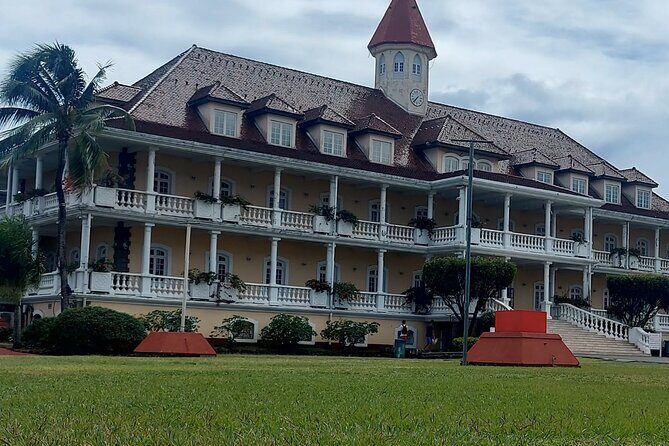
The heart of this tour is how Papeete works politically—how French governance shows up in daily life here. You start at the Présidence de la Polynésie française, a colonial-style building completed in 2004. It’s the kind of place you might miss if you’re just wandering, but with a guide you understand why it exists and what role it plays now. Lydia keeps the explanation practical, tying the current President and the structure of government to what you’ll actually see around town.
Next you move to the Assembly area, where discussions happen about laws that shape life across French Polynesia. This stop has an added layer: it sits on ancient wetlands close to a natural spring called the Queens bath. That matters because it frames the whole city in two time periods at once—today’s political center, and the older landscape that supported early life through natural water sources.
A detail I like here is the way the tour treats history as something you can point at. You’re not just hearing dates—you’re standing in (or beside) places that show French administration alongside Polynesian geography. The admissions listed for these stops are free, so you’re paying for guidance and flow, not ticket costs.
Possible drawback: if you’re not into politics or governance, these are the parts that will feel more like structured learning than scenic sightseeing. Still, even if you skim this section, you’ll come away with a much clearer picture of why signs, architecture, and institutions look the way they do in Papeete.
You can also read our reviews of more tours and experiences in Papeete.


Queens Bath to Cathedral: Wetlands origins and the story behind the seafront church
Papeete’s setting is part of the answer. The city’s beginnings trace back to 1820, when Pastor Crook built a church on the seafront—today that site is occupied by the main Protestant church. The wider area later became the Papeete people know, with the city developing from 1890 onward. And even the name tells you something: Papeete means water basket, a hint that water and natural springs are woven into the place.
So when the tour talks about Queens bath, it’s not random. Queens bath is a natural spring in the government/assembly gardens area, and it ties directly back to the wetlands character of Papeete. Wetlands show up in the tour again at the cathedral stop. You’ll see the Cathedral area connected to Polynesian wetlands, described as being part of birth traditions in earlier times. That’s a sensitive, cultural fact, and it changes how you look at the architecture: this isn’t just a church you pass—it’s a site with deep meaning in the landscape’s past.
From there, you’ll either drive past or walk through central Papeete, depending on your comfort and ability. I like that the guide gives you a choice. If the day is hot or you want to keep your pace easy, you can keep it mostly rolling. If you’d rather feel the streets and take photos, you can walk parts of the route.
A practical consideration: this portion of town is tied to wetter ground and wetland history. That doesn’t mean you’ll be slogging through anything all day, but it does mean you’ll want decent shoes and a bit of flexibility in your pace, especially if weather affects conditions.
Paraita Market: Guided access plus real shopping time
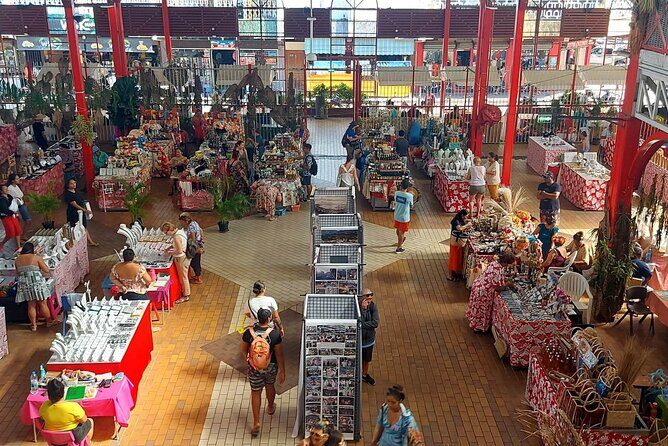
Then you hit the area everyone loves in a city tour: the market. The tour stops at Paraita open-air market, described as the oldest institution in Papeete. It’s been at this site since 1869 and was renovated in 1987 when the market tripled in size. If you’re the type of person who likes to understand local daily life, you’ll feel that instantly here—this isn’t a staged tourist market.
You’ll get a guided visit that includes the market’s lower level, and then you receive about 30 minutes for shopping. That timing is actually useful. Too many tours dump you into a market for an hour with no structure. Here, the guide helps you orient yourself first, then you have a pocket of time to slow down and decide what you genuinely want to buy (snacks and small items are a good fit for this time window).
The tour also includes bottled water, and you’ll find opportunities to buy snacks inside the market area. Lunch isn’t included, but that’s not a deal-breaker. For me, markets work best when you pick something light and local rather than sitting through a full meal with strangers.
One thing to keep in mind: market hours start early. The market is open Monday through Saturday from 5am to 4pm. Since your city tour runs about 3 hours 15 minutes, your exact timing will depend on pickup and route, but you should assume it’s geared toward daytime access when stalls are running.
Also, if rain pops up, you may get less outdoor comfort than you’d like. The operator notes the experience needs good weather, so plan on this tour being weather-dependent rather than a guaranteed rain-or-shine street stroll.
Street art route choice and Queen Pomare VI details you can’t unsee
One of the best ways to understand Papeete fast is to connect landmarks into a single story. This tour does that by linking key buildings and neighborhoods along a route from the Cathedral area toward Papeete’s civic center.
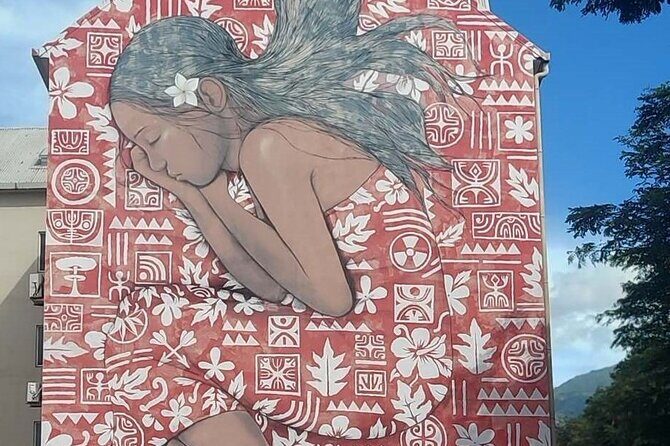
Along the way, you have a real choice: drive past or walk through parts of town. You’ll pass the cathedral area and then get opportunities to see street art. If you walk, you’ll feel the city scale and texture—how people move, where foot traffic naturally gathers, and which corners work for photos. If you drive, you still get the design and street-story context without the time on your feet.
You’ll also see the Papeete town hall, noted as being built in the style of Queen Pomare VI’s palace. This is the kind of detail that makes a city tour click. It’s easy to think of public buildings as separate from cultural identity, but here you can see how local symbolism gets carried into institutional architecture.
I like this stop because it turns sightseeing into comprehension. Instead of collecting isolated photos, you’re getting a guided chain: wetlands origins, religious sites, colonial-era civic buildings, then the market where daily life is happening in a very practical way.
Drawback to consider: this segment depends on your comfort with short movements and changing weather. The tour gives flexibility, but if you strongly prefer one single pace—either fully walking or fully riding—you’ll still need to be adaptable once you’re in the flow of traffic and timing.
Robert Wan Pearl Museum: How black pearls are cultivated
If you still have energy after government, wetlands, and market, the optional stop at the Musee de la Perle Robert Wan is a smart add-on. It’s about black pearls—specifically cultivation—and it traces the work of Robert Wan, described as the first to cultivate black pearls in the lagoons of the Tuamotu and Gambier islands.
What I like about this museum stop is that it doesn’t treat pearls as a magic souvenir item. You’re guided through how black pearls are done, so when you later see pearl jewelry for sale, you have a better sense of what’s behind it. Even if you don’t buy anything, it helps you ask smarter questions and recognize marketing tricks.
The stop is short—about 20 minutes—so it fits the tour’s total timing without stealing time from the market. If you choose not to do the museum, you’ll return to your accommodation after the city and market portion. If you do want extra time in town, you can also stay for lunch or dinner instead of returning right away.
A heads-up: since the museum is optional and the tour is weather-dependent, it’s best to keep your afternoon flexible. If it’s raining or timing gets tight, you might prioritize the market and skip the museum to keep the day comfortable.


Price and value: What $399 per group really buys you

At $399 per group (up to 8 people), the price is really about convenience and guided structure. In practical terms, you’re not paying per head for a long day—you’re paying for a private group experience, with pickup and a guide who helps you connect stops instead of leaving you to figure it out alone.
When I think about value for a city tour, I ask three questions:
- Does it save time? Yes. Pickup and a tight route mean you don’t waste your trip hunting down locations.
- Does it save money on ticket chaos? The stops listed for the presidential complex, assembly, cathedral area, and market are free for admissions, so you’re not stacking paid entry fees. You’re paying for the guide and flow.
- Does it create understanding? The government story, the wetlands origins, and the Robert Wan pearl context all work together. You leave with a mental map of Papeete that’s more useful than photos alone.
One potential snag: because the price is per group, it’s best when you have at least a few people to share the cost. If you’re traveling solo, you’ll either pay the full group rate or you’ll need to check whether another group option is offered on your dates. For couples and small groups, it tends to feel like a solid deal.
Also, this tour is booked about 43 days in advance on average. That’s a sign it’s a popular way to see Papeete without overplanning. If your travel dates are fixed, I’d book early rather than counting on last-minute availability.
Practical planning for a 3 hours 15 minutes Papeete hit
This tour runs about 3 hours 15 minutes and is designed as a structured overview. Here’s how to make it work smoothly in the real world:
First, protect your comfort. Wear shoes you can handle for short walks and uneven urban surfaces. Even though the stops are organized, you’ll still be moving through streets and market areas.
Second, build in flexibility around weather. The experience requires good weather, and the operator notes you’ll be offered a different date or a full refund if it’s canceled due to poor weather. That means you should treat this as a meaningful plan, but not an appointment carved in stone.
Third, plan your food. Lunch isn’t included, but snacks are available in the market. If you want a full meal, consider finishing with town time for lunch or dinner, especially since the tour includes an option to stay longer instead of going straight back.
Fourth, use the group-private setup. The guide, Lydia, has a reputation for adjusting to interests and the weather. That’s your chance to steer slightly—more street art photos, less politics talk, or extra time in market aisles—without messing up the whole schedule.
Finally, appreciate the driving style. In reviews, the driver is described as safe and cautious even in heavy traffic, and that matches what you want in Papeete: calm transit so you can focus on the stops rather than white-knuckle timing.
Should you book the Papeete City Tour?
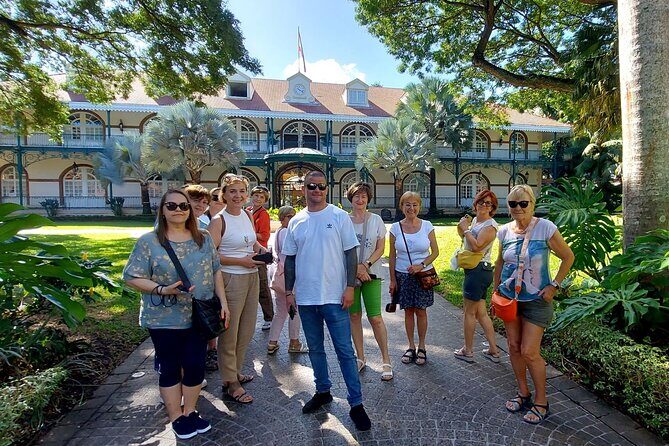
Book it if you want a clear, guided first look at Papeete that explains why the city looks the way it does—politics, wetlands origins, and everyday market life all in one flow. It’s also a great fit if you like learning from a real local guide and you value private-group comfort.
Skip it (or pair it differently) if your day is mainly about lagoons, snorkeling, or beach time. This tour is about town, context, and culture, not waterside adventures.
If you can handle short walking and you’re traveling with 1–8 people who’ll share the group rate, it’s a strong value. And if you’re the type who wants to understand French Polynesia beyond a postcard, Lydia’s style—energetic, flexible, and focused on what you’re actually seeing—makes the whole route feel purposeful.
FAQ
How long is the Papeete City Tour?
It runs about 3 hours 15 minutes.
How much does the tour cost?
The price is $399.00 per group, up to 8 people.
Is pickup included?
Yes, pickup is offered from your accommodation or an agreed meeting point.
Is this tour private?
Yes. It’s private, and only your group participates.
What’s included in the tour price?
Bottled water is included.
What’s not included?
Meals aren’t included, though snacks are available for purchase in the market.
What stops are included?
You’ll visit the Présidence de la Polynésie française, the Assembly area, central Papeete sights (including the Cathedral area), the Paraita open-air market, and optionally the Musee de La Perle Robert Wan.
Are the admissions for the stops charged?
The listed admissions for the presidential place, assembly area, Papeete sights, and the market are free.
Does the tour require good weather?
Yes. It requires good weather, and if it’s canceled due to poor weather you’ll be offered another date or a full refund.
Can I cancel and get a refund?
Free cancellation is available. You can cancel up to 24 hours in advance for a full refund.