REVIEW · BORA BORA
Bora Bora: 4WD History & Culture Tour
Book on GetYourGuide →Operated by Vavau Adventures · Bookable on GetYourGuide
Bora Bora has a dirt side. This 4×4 history-and-culture tour pairs WWII stops from 1942 with older Tahitian legends, then sends you to viewpoints you simply can’t reach on a regular road. I especially love the combo of hard history with everyday island life, like the pareu-making workshop and coconut oil lessons. One catch: some roads get steep and narrow, and bad weather can dull the views.
The good news is that it’s short and well paced. You get back to your meeting point with full heads, cold towels, and a few snacks, without turning the day into a logistics project.
In This Review
- Key things I’d clock before you go
- Bora Bora by 4×4: why 3 hours feels like more
- WWII sites from 1942 and Tahitian seafaring legends around 1,000 AD
- Faanui Valley fruit plantations and a pareu workshop where you can ask real questions
- Lookout points you reach by steep one-track roads (and why that matters)
- Price and value: $72 for 3 hours of history plus included fruit
- Guide style in English or French: what to expect and how to get more
- Timing, weather, and comfort choices that actually help
- Who this Bora Bora 4WD history and culture tour fits best
- Should you book this Bora Bora 4WD History & Culture Tour?
- FAQ
- How long is the Bora Bora 4WD History & Culture Tour?
- How much does it cost?
- What’s included in the tour?
- Where does the tour take place?
- What languages is the live guide available in?
- Is pickup included, and where do I meet?
- What history and culture stops are part of the tour?
- Do you visit a pareu-making workshop?
- What food or tasting is included?
- What are the cancellation terms and payment options?
Key things I’d clock before you go
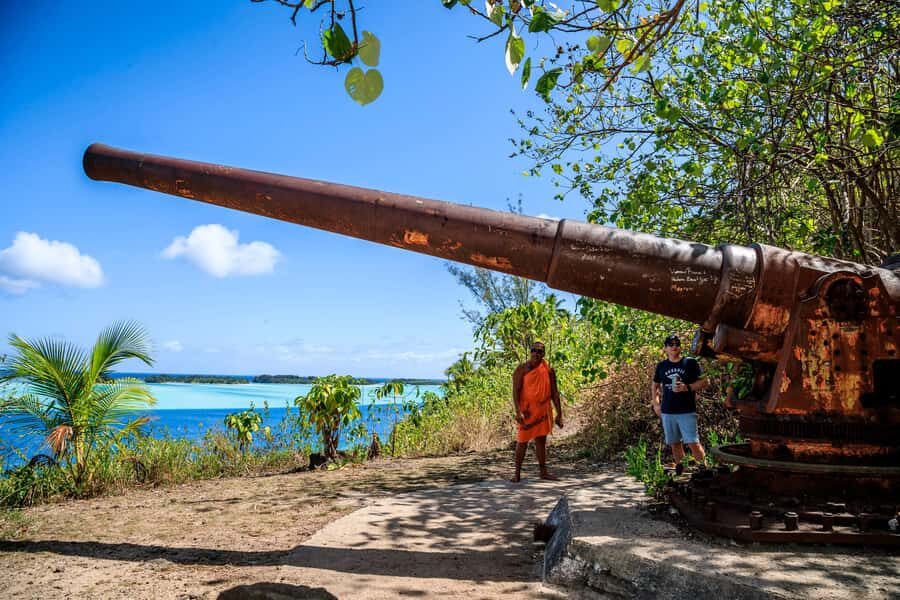
- WWII sites from 1942 plus a stop for WW2-style cannons, with a bit of walking on uneven ground
- Ancient Tahitian temples tied to a seafaring society around 1,000 AD, plus legends to connect the dots
- Faanui Valley fruit plantations and a real sense of how people grow and use local plants
- Family pareu workshop where you’ll see how tie-dye style sarongs are made
- Coconut oil and fruit tasting included, so culture is hands-on, not just photos
- Off-road lookout points reached by challenging tracks that make the scenery feel earned
Bora Bora by 4×4: why 3 hours feels like more
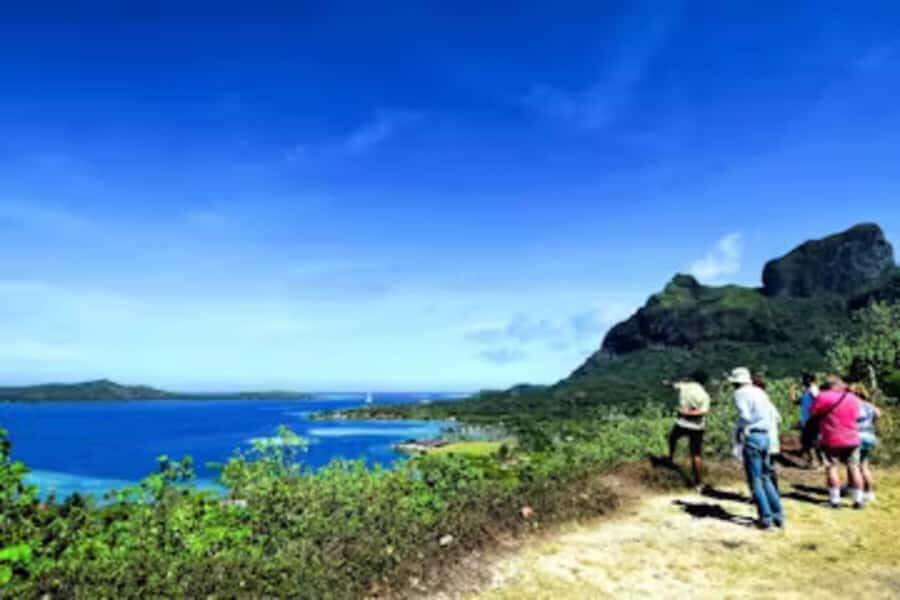
This is a land tour that’s built around access. In Bora Bora, a lot of the best viewpoints sit beyond the easiest roads. That’s why you’re in a 4×4 for the scenic parts, not a bus with a polite, predictable route. The payoff is simple: you spend your time where the terrain forces the island’s “other side” to show up.
The pace is also realistic. In about 3 hours, you’re covering a mix of history stops, cultural moments, and lookout breaks. It’s not a “slow museum day.” Instead, it’s a guided loop that gives you context fast, then lets the views and stories stick.
You also get practical comfort that makes a difference in French Polynesian heat: bottled water, cold wet towels (oshibori), and local fruit as part of the included touches. Guides work in English and French, so you’re not stuck guessing what you’re looking at.
Pickup depends on where you’re staying. If you’re around Matira, expect pickup around 8:30 AM. If you’re in Vaitape, the meeting point is the main pier by the bleu taxi sign, and you’ll want to be there at 9:00 AM.
You can also read our reviews of more tours and experiences in Bora Bora.

WWII sites from 1942 and Tahitian seafaring legends around 1,000 AD
The “history” here isn’t a dusty lecture. It’s tied to physical places you can point at. The tour includes stops connected to World War II, when Americans built sites on the island in 1942. You’re not just told a date; you’re shown the kind of remnants that make the story feel real.
Then the tour stretches much farther back. You’ll learn about ancient temples connected to a Tahitian seafaring society, with temples described as being built around 1,000 AD, plus the island legends that grew around how people navigated the ocean. For me, this pairing matters. WWII Bora Bora explains one chapter, but the older seafaring story is what helps you understand why the island’s culture is so ocean-minded.
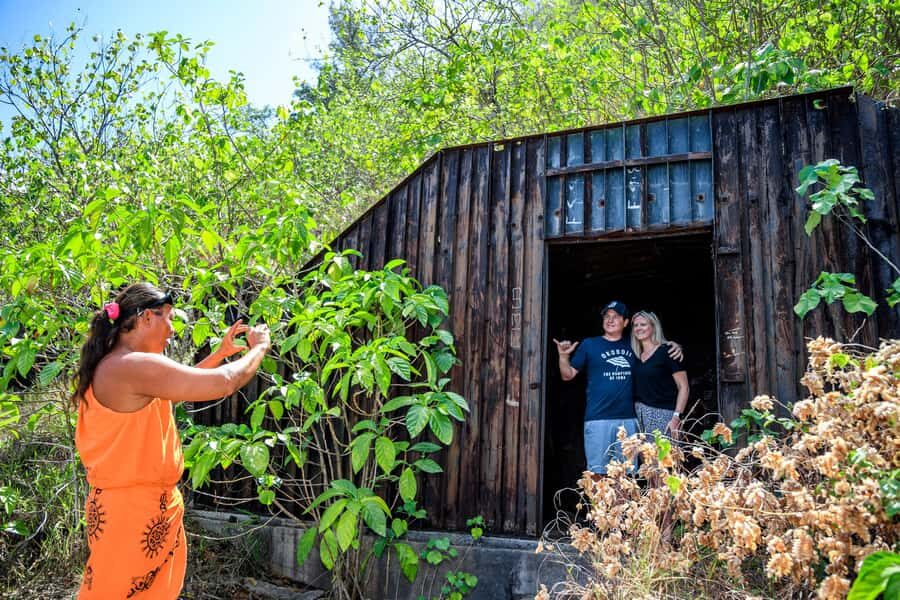
A detail I’d treat seriously: you may get out for short walks at certain stops. One WW2-related stop includes cannons, and that’s not a place you’ll want to shuffle around in flimsy footwear. If you’re wearing flip-flops, you’ll feel it quickly. Plan on trainers or solid walking sandals.
If you care about the guide’s storytelling style, this tour has variety. Some guides, like Terie, have been known to add local music to the ride, including serenading the group. Others, like Deano, keep explanations tight while pointing out old resort areas and even what local trees get used for. Either way, the goal is the same: make the island’s layers easier to remember.
Faanui Valley fruit plantations and a pareu workshop where you can ask real questions
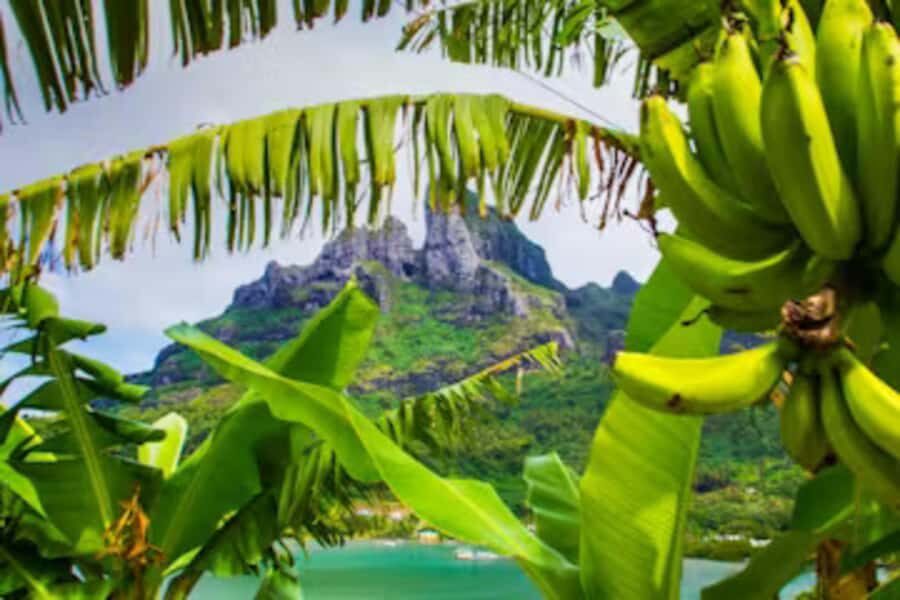
One of the most “Bora Bora” moments is the part that looks less like tourism and more like community time. You head into Faanui Valley, where you’ll see small fruit plantations and get a sense of what people grow close to home.
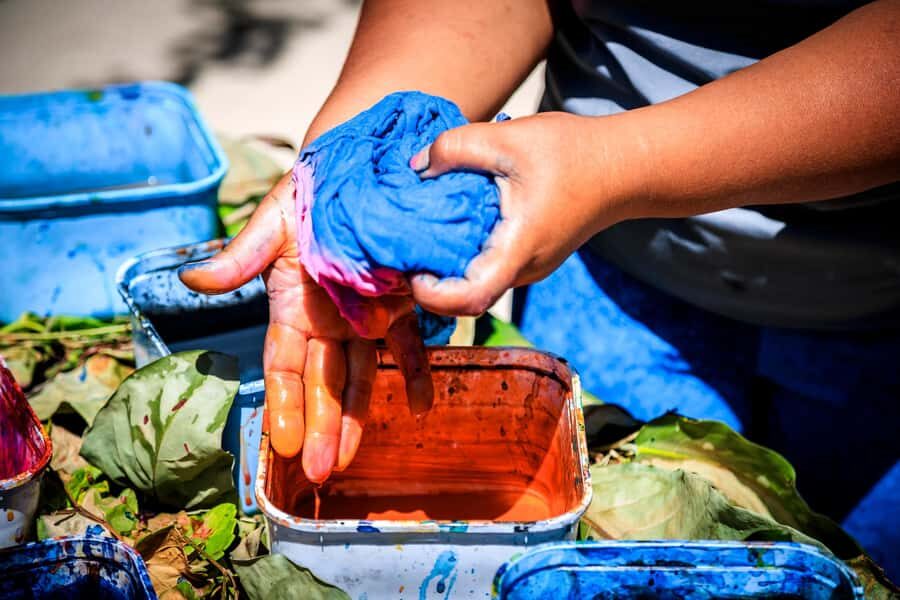
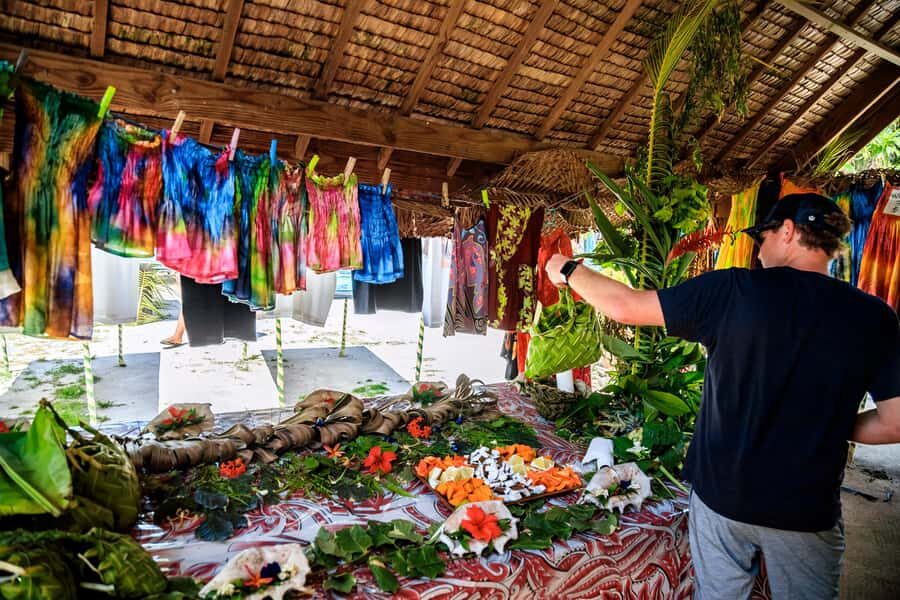
Then you stop at a pareu-making workshop. This is a family-owned-style stop, and it’s focused on how these tie-dye style sarongs are made. You’ll watch the process, learn what goes into the craft, and get context for why pareu patterns and materials matter culturally.
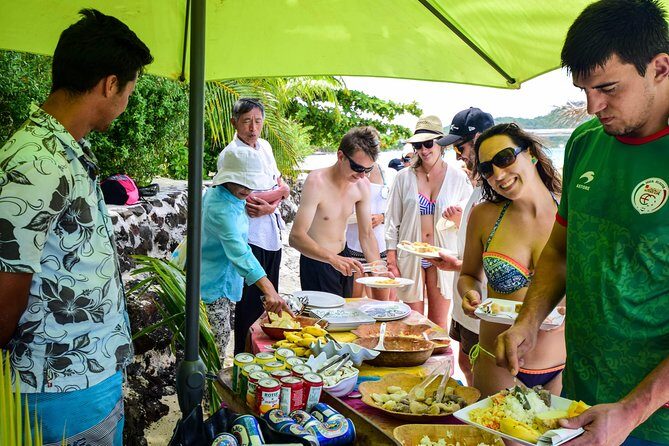
What makes this stop especially worthwhile is that it doesn’t stop at fabric. You’ll also learn about coconut oil—how it’s made—and you’ll get to taste local fruits. That combination is the difference between souvenirs and souvenirs-with-context.
A practical tip: if you’re the kind of person who likes to understand what you’re buying, come ready with a couple of questions. You’ll get more from the shop if you’re asking about the steps, the materials, and how local fruit and coconuts fit into everyday life.
Lookout points you reach by steep one-track roads (and why that matters)
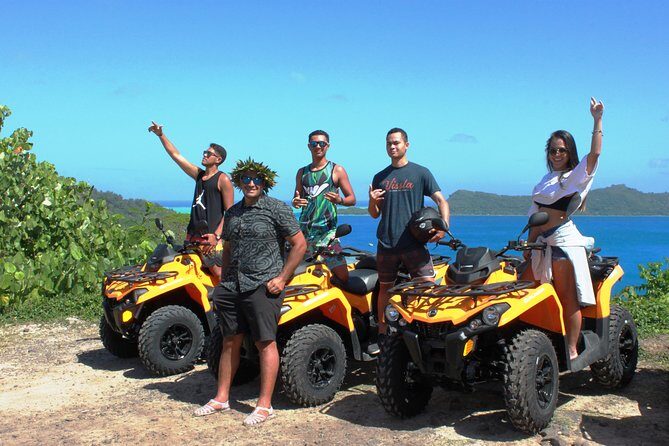
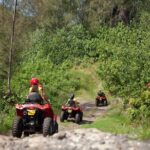
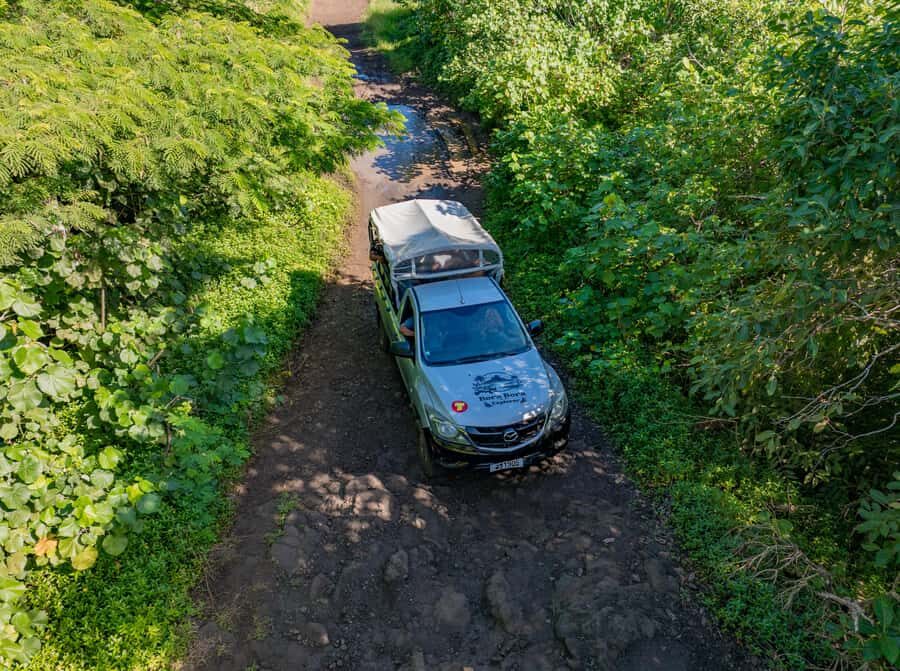
The scenic breaks are a big reason to pick this tour instead of staying strictly on the main road. You’ll hit breathtaking lookout points that are accessible by 4×4 only. Translation: the views cost effort, and that’s why they feel different.
The roads are not always gentle. I’d call this out plainly: some routes involve steep climbs and one-track sections, and the conditions can feel rough in places because of where you’re driving. That’s also why a good driver matters. Guides like Deano and Tamanono have been praised for handling these tracks well, even when conditions are challenging (including bad weather).
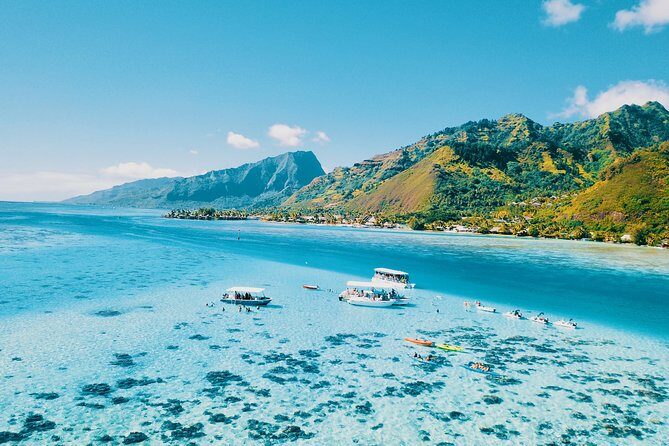
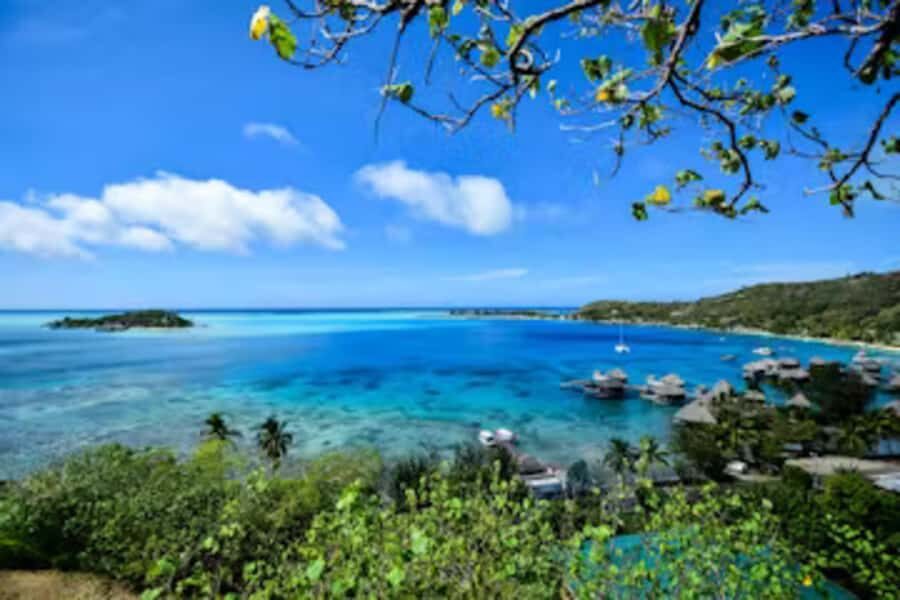
This is also where the tour can surprise you emotionally. One guide (reported as Terie) took a group up to a mountain top with a view of the lagoon waters around the island. Even if you’ve seen Bora Bora postcards before, this angle changes your mental map fast.
Just don’t treat it as a casual sightseeing stroll. If you’re traveling with anyone prone to motion sickness or anxiety on narrow roads, it’s worth considering how they’ll handle steep turns and off-road bumps.
Price and value: $72 for 3 hours of history plus included fruit
At $72 per person for 3 hours, the value depends on what you want Bora Bora to be.
If you want lagoon views only, this might feel like a detour. The tour is about land access—history sites, temple context, valley plants, and a pareu workshop—so the best moments are spread out across stories and viewpoints.
But if you want a guided way to understand what you’re seeing from the ground up, $72 starts to look fair. You get:
- a live guide in English or French
- bottled water and cold wet towels
- local fruits
- transportation by 4×4 to specific lookouts and off-road-access areas
And because it’s only 3 hours, you’re not committing an entire day to land touring when you might also want lagoon activities. It’s a good “add-on day” option if your schedule is tight.
Weather is the one pricing wildcard. Some departures lose parts of the scenery when conditions are cloudy or rainy, so the payoff can shrink. Still, you’re not paying for just a single view. You’re paying for the mix of stops and the guided context.

Guide style in English or French: what to expect and how to get more
This tour runs with a live guide in English and French. In practice, you’ll usually get plenty of explanation and time for questions. Several guides are praised for communication and for adjusting to the group.
You might also notice that the English level can vary. One experience described English translation as broken, so if language nuance matters to you, I’d consider planning for a bit of “listen for the big ideas” rather than expecting every detail to land perfectly.
Even with that, the most memorable moments tend to be the moments that don’t depend on perfect vocabulary: the physical WW2 remnants, the workshop demonstrations, the fruit and oil tastings, and the lookout stops where you can simply watch the island open up.
If you’re lucky, you’ll get personality too. One guide was noted for being friendly and professional and for bringing local tunes into the ride. Another guide helped the group stay informed as the tour moved between stops. That kind of flow is part of the value.
Timing, weather, and comfort choices that actually help
Bora Bora weather can shift fast. Some guides still deliver a solid tour even when rain appears, but you may not see everything the way you hoped. I’d treat visibility as a bonus, not a guarantee.
Comfort choices matter because the tour includes road time plus occasional walking. Based on what’s worked for others, I’d go with:
- trainers (or sturdy walking sandals) for WW2-style stops and any uneven surfaces
- a light layer in case the morning feels damp
- something that grips well for steep, bumpy sections
Also, make sure you’re on time for pickup. If you’re in Vaitape, aim to be at the main pier by the bleu taxi sign at 9:00 AM. If you’re by Matira, plan around 8:30 AM pickup.
If your schedule is flexible, there’s free cancellation up to 24 hours in advance for a full refund, plus an option to reserve first and pay later. That reduces risk if your weather plans are still in flux.
Who this Bora Bora 4WD history and culture tour fits best
This tour suits you if you want Bora Bora beyond the postcard. It’s ideal for people who like:
- guided history with visible place-based stops
- cultural craft time, especially pareu-making
- scenic lookouts reached by real off-road driving
- a mix of stories and small tastes (fruit and coconut oil)
It may not fit if your priority is purely flat, easy strolling views. The steep, narrow road sections are part of the deal. If you know you dislike that style of travel, you may prefer a less rugged island route.
Should you book this Bora Bora 4WD History & Culture Tour?
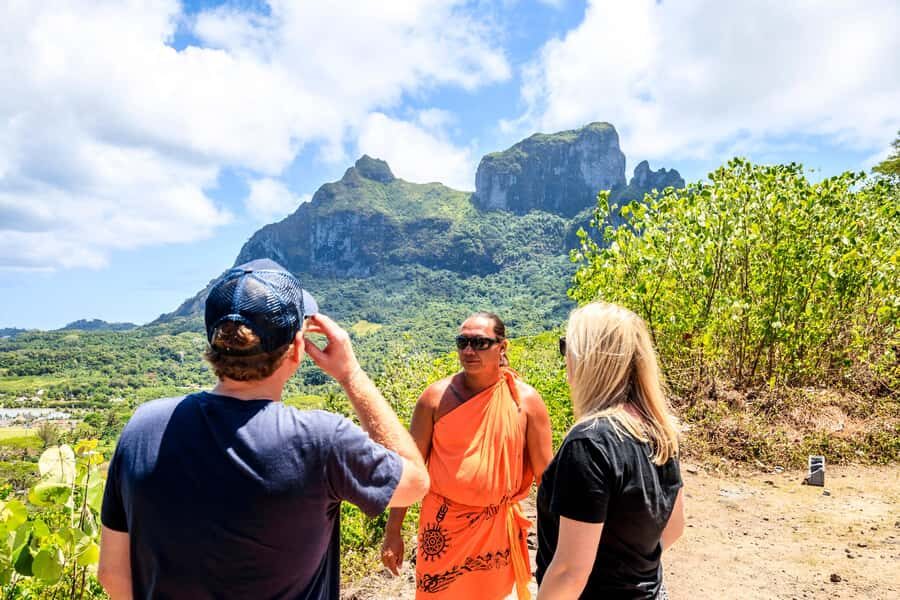
I’d book this if you want a compact, guided “island context” hit: WWII from 1942, temples described around 1,000 AD, a hands-on pareu workshop, and a few lookouts that only show up on land tours with 4×4 access.
I’d skip or swap it if your day is all about maximum lagoon glamour and you’d rather spend time on water-based views instead of the road-based viewpoints and workshop stops.
If you do book, set yourself up for the best experience: wear solid shoes, expect steep tracks, and come ready to ask questions. The tour’s strength is turning Bora Bora into a story you can actually picture.
FAQ
How long is the Bora Bora 4WD History & Culture Tour?
It’s a 3-hour guided experience.
How much does it cost?
The price is $72 per person.
What’s included in the tour?
You’ll get bottled water, oshibori cold wet towels, and local fruits. You’ll also be on a guided sightseeing off-road adventure with an arts and crafts market stop.
Where does the tour take place?
It’s in Bora Bora, in the Leeward Islands, French Polynesia.
What languages is the live guide available in?
The live guide offers English and French.
Is pickup included, and where do I meet?
Pickup is included. If you’re staying around Matira, pickup is around 8:30 AM. If you’re in Vaitape, meet at the main pier by the bleu taxi sign, and arrive by 9:00 AM.
What history and culture stops are part of the tour?
You’ll visit WWII heritage sites connected to Americans built in 1942 and learn about ancient temples connected to a Tahitian seafaring society built around 1,000 AD, plus local legends.
Do you visit a pareu-making workshop?
Yes. You’ll stop at a pareu-making workshop where you can see how the tie-dye type sarongs are made, and you’ll also learn about coconut oil.
What food or tasting is included?
You’ll have local fruit as part of the included experience.
What are the cancellation terms and payment options?
You can cancel up to 24 hours in advance for a full refund. There’s also a reserve now & pay later option shown as available.