REVIEW · BORA BORA
Aqua Safari Introductory Helmet Dive (Underwater Walk)
Book on Viator →Operated by Aqua Safari Helmet Dive · Bookable on Viator
Walking under Bora Bora takes courage—and pays off. This Bora Bora helmet walk lets you experience the lagoon up close without swimming skills, plus your guide handles the safety side while you enjoy the fish-filled reef scenery.
I especially love how easy it is to participate. You get a clear safety briefing, all the gear is provided, and the underwater route stays controlled with a roped-off area—so your brain can focus on the beauty. A second big win: the crew takes high-definition photos during the underwater time, so you leave with more than just blurry memories.
One consideration: it is not the cheapest activity on Bora Bora. A few people felt the price is high for what it is, even though the organization, photos, and short underwater time make sense for many visitors.
In This Review
- Key takeaways before you book
- Why the helmet walk is so different in Bora Bora
- What happens before you enter the water
- Walking the coral garden: fish, reef, and those stingrays
- The crew and the small details that make it feel safe
- Photos you’ll actually want to keep
- How long it takes and how the day flows
- Price and value: what $158.76 buys you
- Who should book this underwater helmet walk
- Booking timing and weather: the one variable you can’t control
- Should you book Aqua Safari’s underwater helmet walk?
- FAQ
- How long is the underwater time?
- How deep do you go?
- Do I need to know how to swim or snorkel?
- Is it suitable for kids?
- What’s included with the tour?
- Are there photo packages for purchase?
- Is pickup offered?
- Where is the meeting point?
- How many people are on the tour?
- What happens if the weather is poor?
Key takeaways before you book
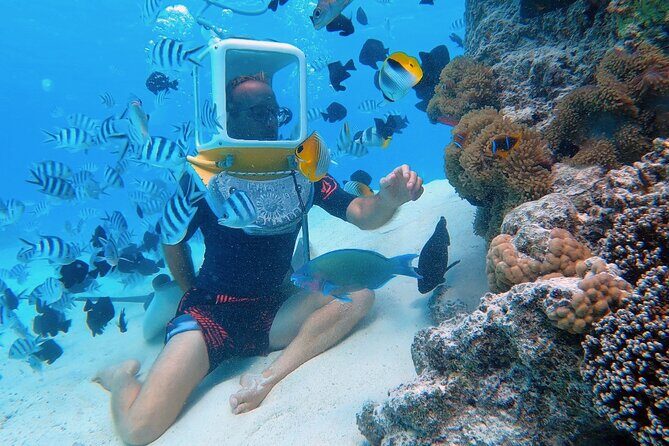
- You walk at about 3 meters (around 10 feet), for roughly 30 minutes underwater
- No swimming, snorkel, or scuba skills needed—all gear and instruction are included
- Small-group feel with a maximum of 12 travelers
- Photos are part of the experience, captured by the instructor using a high-definition camera
- Expect close fish action, including parrot fish, butterfly fish, clown fish, moray eels, and stingrays
- You may need to manage ear pressure and helmet vision, with tips like chewing gum
Why the helmet walk is so different in Bora Bora
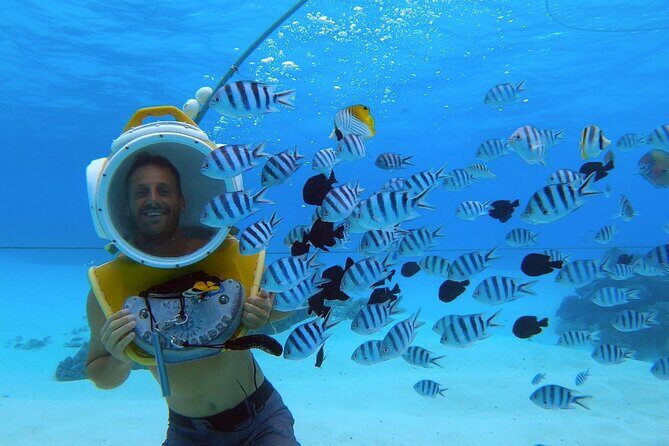
Bora Bora is famous for lagoon beauty, but most water activities assume you’re comfortable floating and breathing with your face in the water. This is the alternative for people who want the close-up look without the usual intimidation.
The big idea is simple: you put on a helmet and walk along the lagoon floor while a professional guide stays close. That means you can watch coral gardens and fish behavior in a calmer way than traditional snorkeling. You’re not fighting buoyancy, you’re not tracking snorkel gear, and you’re not constantly adjusting to waves and waves of panic.
Also, I like the way the experience is designed around comfort. Multiple guides are involved so one person can focus on timing and control while another focuses on photography. Some groups even mention holding onto a rope when conditions get breezy or a bit current-y, which tells you the route is meant to be guided, not chaotic.
You can also read our reviews of more tours and experiences in Bora Bora.

What happens before you enter the water
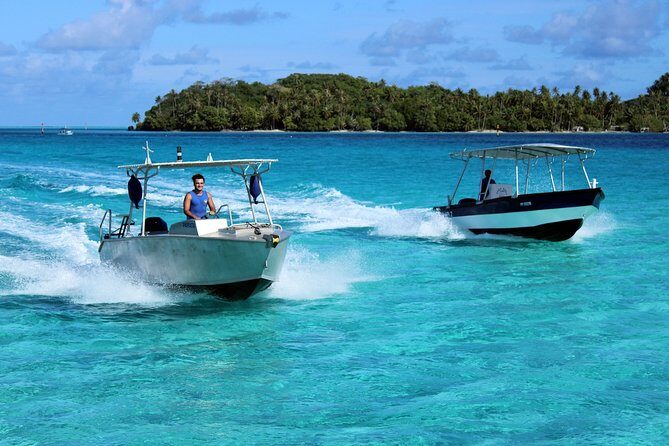
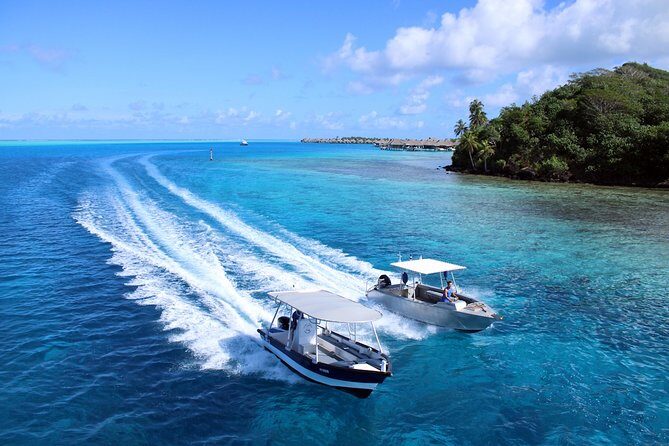
You meet at the Ferry and Boat Point (F6VX+53X, Bora-Bora). From there, you’ll head out by boat to the lagoon area where the equipment is ready.
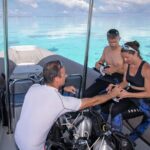
Before anyone goes in, you get a briefing and gear setup. You don’t have to bring anything technical; the tour includes what you need. In practice, this matters because it removes a lot of the usual “what am I doing?” stress that can ruin a fun day.
The next step is the helmet routine itself. People report that once the helmet is on, breathing feels normal and straightforward. The early moments can still feel strange because your head is enclosed and your vision changes. One helpful heads-up: peripheral vision is limited, so you may feel slightly disoriented at first. The way to handle it is to slow down, look where you’re pointed, and follow the crew’s cues.
If you’ve ever had ear trouble with pressure changes, the guides’ advice is worth taking seriously. One reviewer specifically suggested chewing gum to help with ear popping. You might not need it, but having gum in your pocket is an easy “better safe than sorry” move.
Walking the coral garden: fish, reef, and those stingrays
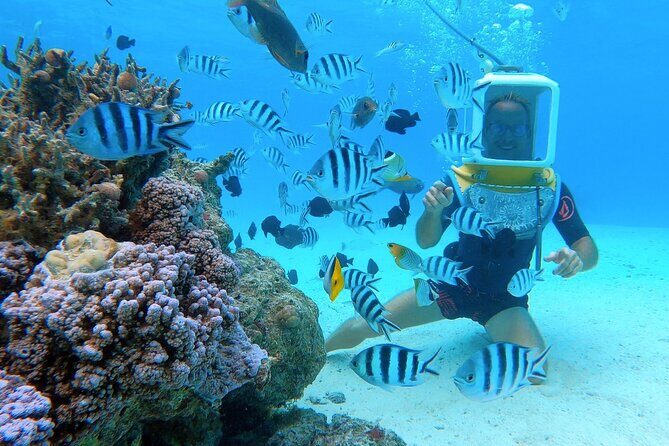
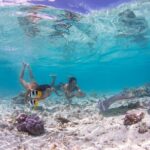
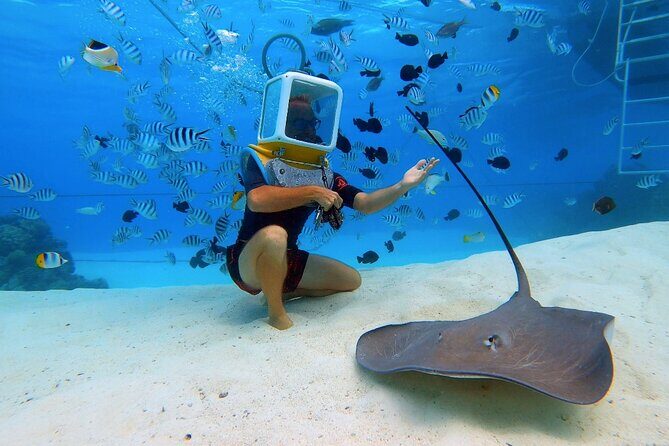
Once you’re ready, you descend to a shallow depth. Expect around 3 meters (about 10 feet), with some groups describing descent closer to 15 feet depending on conditions. The route is centered on a coral garden, surrounded by reef, where you walk on sand.
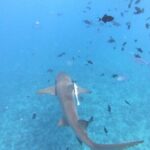
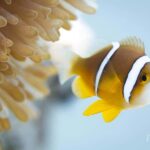
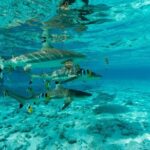
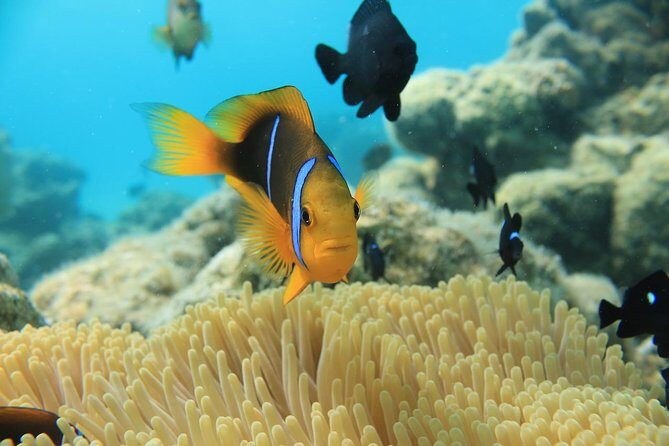
This is where the experience earns its reputation. The fish don’t just swim past you once. They often hang around as you move slowly. Based on the tour description and the way people describe the moment, you should plan for multiple species in one session, including parrot fish, butterfly fish, clown fish, and moray eels. And yes, stingrays show up regularly enough that it becomes part of the story.
A standout detail from the reviews: the crew works with a stingray that can behave almost like a resident animal with a familiar routine. People mention it swimming near them and even staying close during the walk. That is a big reason this feels more intimate than a quick snorkel pass—you’re stationary enough and controlled enough to let wildlife come to you.
You’ll also notice the reef is managed in a way that keeps you from going too far. Several people talk about the area being roped off, so you’re not wandering and guessing. That matters for anyone who wants the lagoon’s “wow” without feeling like they’re responsible for navigating underwater.
What to watch for as you go
- Take your time scanning the coral rather than rushing forward.
- Look for different fish behaviors: some move like they’re grazing, others hover and inspect.
- When a guide signals you to watch something specific, follow that moment. Fish and stingrays often appear when you pause.
The crew and the small details that make it feel safe
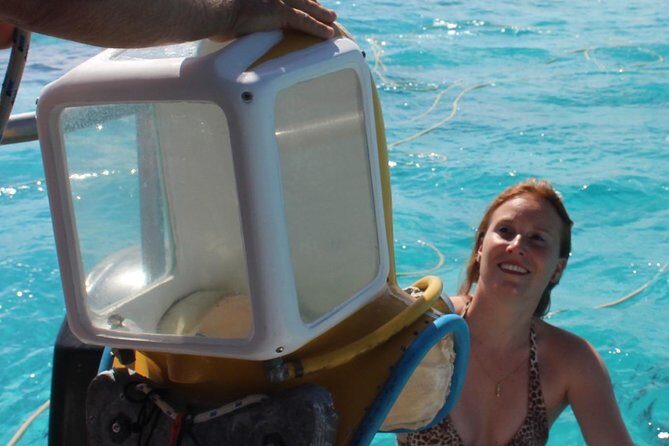
Aqua Safari runs this with a team approach. Names that show up in the experience notes include Tama, JP, Rémi, Demi, Eliza, Sebastian, Neven, Nicholas, and Séverine. Different guides bring different communication styles, but the common thread is that they explain the steps clearly and keep you comfortable.
Another repeated theme: the guides help with nerves. If you’re anxious about being underwater, you’re not expected to just “tough it out.” People describe the crew as patient and attentive, especially during the first descent moments.
Small group size also helps safety and attention. With a cap of 12 travelers, you’re not getting swallowed by a giant crowd. One review described how multitasking happens: one diver handles bringing people up and down while another takes photos. That division of labor is exactly what you want when you’re doing a short underwater session—everyone stays on task.
And when conditions aren’t perfect—some people mention wind or slight current—the crew still keeps things manageable. A simple example from the notes: if you feel drag, you can hold the rope and let the system work for you.
Photos you’ll actually want to keep
This tour isn’t only about seeing fish. It’s also about leaving with underwater photos that show you in the helmet and in front of the reef.
The guides use a high-definition camera to take pictures during the underwater walk. People repeatedly call the photo package worth it, and some mention being able to review and purchase images immediately on the boat after the session.
Still, you can boost your chances of great shots. One reviewer recommended bringing a go pro, another suggested bringing a waterproof camera, and several people emphasized the clarity of the underwater moment. Since your view inside the helmet is limited, it can help to have a second device ready for the reef scenery rather than trying to photograph through the helmet with your eyes strained.
Practical photo tips
- Bring waterproof camera gear if you already have it.
- Expect to move slowly. The fish and coral look best when you’re not rushing.
- If you’re anxious at first, focus on the guide’s timing; a steady rhythm makes better photos.
A few more Bora Bora tours and experiences worth a look

How long it takes and how the day flows
The total experience runs about 2 hours, with about 30 minutes spent underwater. That balance is part of the value. You get a meaningful underwater time without turning your whole day into a water-only event.
There’s also a boat component. A scenic ride to the site is part of the experience, and people mention it as a nice break rather than a chore. Another plus: the day doesn’t require you to be an expert swimmer or snorkeler beforehand, so you’re not spending your morning practicing.
Your activity ends back at the meeting point. That makes it easier to plan the rest of your Bora Bora day, especially if you want time for a beach stop, a meal, or a short drive around the island.
Price and value: what $158.76 buys you
At $158.76 per person, this isn’t a budget activity. And if you’re the type who wants maximum minutes in the water for the money, you may agree with the concern that it can feel over priced.
But here’s the value angle that often convinces people anyway:
- Equipment and instruction are included. You’re not paying extra for rental gear or for someone to babysit you through basics.
- Underwater photography is built in. The high-definition camera work and the photo package are part of the experience, not a random add-on.
- It’s built for non divers and non swimmers. If you’re paying because the activity replaces a “learn to snorkel first” hurdle, the value changes.
- Small group size keeps the experience more personal than big-boat tours.
So the pricing makes the most sense when you fit the target audience: families with kids, people who can’t swim, or adults who want a controlled underwater experience without scuba training.
If you already snorkel confidently and want lots of free time in open water, you might decide this is worth it only if you strongly value the helmet format and the photo package.
Who should book this underwater helmet walk
I’d point you toward this if any of these sound like you:
- You want Bora Bora’s underwater look, but you don’t swim well.
- You love snorkeling, but you don’t want the usual gear complexity or face-in-water feel.
- You’re traveling with kids who need reassurance and clear guidance.
- You want a short, high-impact underwater moment rather than a long technical course.
- You wear glasses and worry about snorkel-fit issues. One review specifically picked this because glasses made traditional snorkeling difficult.
It can also work if you’re a strong swimmer, because the helmet walk route and roped boundaries reduce uncertainty. But if your goal is maximum freedom to roam, the controlled area may feel limiting.
Booking timing and weather: the one variable you can’t control
This is an experience that depends on good weather. If conditions aren’t safe, it can be rescheduled or refunded, so you’ll want to keep at least one flexible option in your Bora Bora plans.
Also, pay attention to pickup communication. Some people mention that the pickup time can be different than they expected, even if the crew arrives on schedule. Give yourself margin and read your details when they come in.
Should you book Aqua Safari’s underwater helmet walk?
Book it if you want a safe-feeling underwater experience with guided attention, a shallow coral garden, and a good chance of seeing stingrays up close. I think it’s especially worth it for families, nervous swimmers, and anyone who wants the lagoon without the usual intimidation factor.
Skip it or compare alternatives if you’re chasing hours of free water time, you already know you’ll be uncomfortable with helmet vision, or you’re very price-sensitive and only want the lowest-cost way to see fish.
If you’re on the fence, my advice is to decide what you’re buying: not just fish, but the whole package—gear, briefing, guided route control, and instructor photography—so you can focus on watching the reef instead of managing equipment.
FAQ
How long is the underwater time?
You spend about 30 minutes underwater during a total experience of around 2 hours.
How deep do you go?
You’ll walk at around 3 meters deep, which is described as roughly 10 feet. Some groups report descending closer to 15 feet depending on conditions.
Do I need to know how to swim or snorkel?
No. The tour is designed so you don’t need swimming, snorkeling, or scuba experience.
Is it suitable for kids?
It’s described as one of the best options for kids in the reviews, and it’s presented as suitable for adults and children who want a guided underwater experience.
What’s included with the tour?
All necessary equipment and a safety briefing are included. Your instructor also takes high-definition photos during the underwater walk.
Are there photo packages for purchase?
Yes. The souvenir photos are offered at the end of the activity, and many people say the photo package is worth the cost.
Is pickup offered?
Yes. Pickup is offered, and you’ll also return to the meeting point afterward.
Where is the meeting point?
The start is at the Ferry and Boat Point (F6VX+53X, Bora-Bora, French Polynesia), and the activity ends back at the meeting point.
How many people are on the tour?
This activity has a maximum of 12 travelers.
What happens if the weather is poor?
The experience requires good weather. If it’s canceled due to poor weather, you’ll be offered a different date or a full refund.